
Vehicle sensor failures can cause engine stalling, rough idling, poor fuel economy, and problems with braking or stability control. Common causes include faulty crankshaft, oxygen, mass airflow, and wheel-speed sensors. Accurate diagnosis requires checking trouble codes, live sensor readings, and electrical connections before replacing parts to avoid unnecessary repairs.
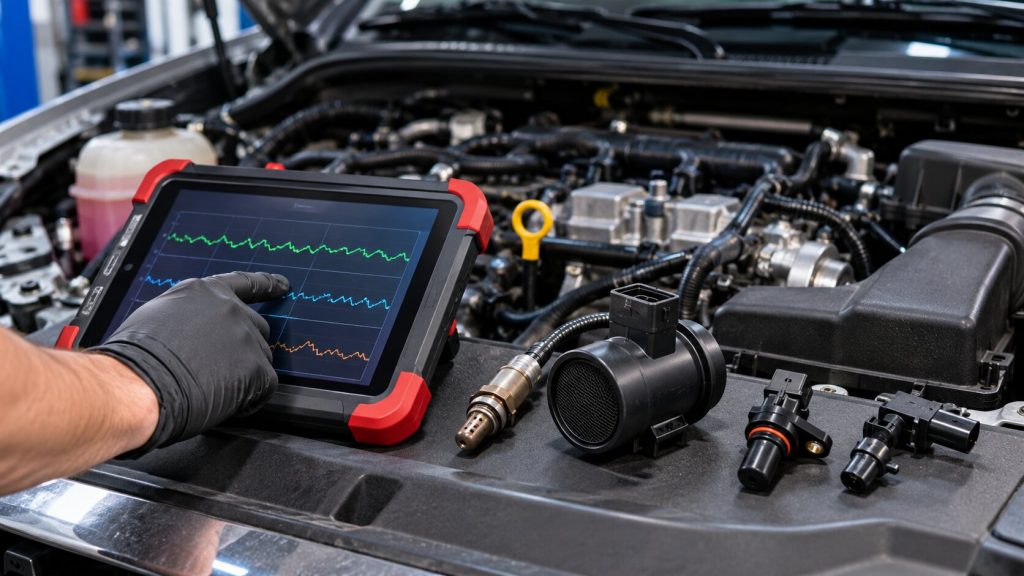
A faulty vehicle sensor can cause rough idling, sudden stalling, poor fuel economy, or warning lights on the dashboard. Sensors send information to the engine computer and other vehicle systems, allowing them to adjust fuel delivery, ignition timing, braking, and stability control. When those readings become inaccurate or disappear, the vehicle may hesitate, use more fuel, or respond differently while driving.
Common Sensor Problems in Springboro Traffic
Stop-and-go traffic along Route 741 and Central Avenue can make existing sensor problems more noticeable, especially during hot summer weather. A vehicle might idle roughly at an intersection, hesitate when pulling away, or struggle to restart after a short stop. At Schmidt Auto Care in Springboro, identifying which system is causing the complaint is more useful than replacing a sensor based on symptoms alone.
Heat can aggravate worn electrical connections, damaged wiring, and certain internal sensor faults. Some problems appear only after the engine reaches operating temperature, while others develop gradually and trigger a dashboard warning. The timing of the symptoms often provides a useful clue about which system needs attention.
Five Vehicle Sensors That Commonly Cause Driving Problems
Different sensors control different parts of vehicle operation, so their symptoms can overlap without having the same cause. An engine that stalls unexpectedly requires a different investigation from one that gradually starts consuming more fuel. These five sensors are worth checking when the symptoms point toward their systems.
- Crankshaft position sensor: Tracks engine rotation and helps control ignition and fuel injection, with faults potentially causing stalling or difficult starting.
- Mass airflow sensor: Measures incoming air, with inaccurate readings sometimes causing hesitation, rough running, or increased fuel consumption.
- Oxygen sensor: Monitors oxygen in the exhaust, helping the engine computer adjust fuel delivery and emissions.
- Engine coolant temperature sensor: Reports engine temperature, with incorrect readings potentially affecting cold starts, idle quality, and fuel mixture.
- Wheel-speed sensor: Tracks wheel rotation for anti-lock braking and stability control, with faults potentially triggering safety-system warnings.
A check engine light may accompany an engine sensor problem, but the warning alone cannot identify which part needs replacement. Wheel-speed sensor problems may instead illuminate ABS or stability-control warnings. Reading the stored codes and checking related data can separate a sensor concern from wiring or mechanical trouble.
Engine Stalling and Rough Idling
A failing crankshaft position sensor can interrupt the engine computer’s ability to track engine rotation. When the signal disappears, the engine may stall while driving or crank without starting, particularly if the fault becomes worse when hot. Fuel pump problems, ignition faults, and loose electrical connections can produce similar symptoms.
Rough idling and hesitation may also involve the mass airflow sensor or inaccurate engine temperature readings. A dirty throttle body, vacuum leak, or worn ignition component can create complaints that resemble sensor trouble. The actual cause becomes clearer when a technician checks the relevant readings while the engine is running poorly.
Fuel Economy and Incorrect Sensor Readings
An oxygen sensor that reports inaccurate exhaust information can cause the engine computer to make unsuitable fuel adjustments. Mass airflow and coolant temperature sensor problems can also affect fuel delivery, sometimes increasing consumption or making the engine run unevenly. A gradual drop in gas mileage deserves attention to these systems, along with tire pressure, driving conditions, and routine maintenance.
A crankshaft position sensor fault is more likely to cause starting or stalling trouble than a steady increase in fuel use. Replacing it because the vehicle is consuming more gasoline may leave the actual issue untouched. Fuel-trim data and other engine measurements can indicate whether the computer is correcting an inaccurate air-fuel mixture.
Sensor Problems That Affect Driving Safety
Some sensor faults affect systems beyond the engine. A damaged wheel-speed sensor can interfere with anti-lock braking or electronic stability control, potentially reducing assistance during hard braking or slippery-road conditions. A warning light for either system deserves attention even when the vehicle seems to drive normally.
Engine sensor problems carry their own risks when they cause sudden shutdowns. A stalled engine may leave the driver with reduced steering or braking assistance, depending on the vehicle’s design, while also removing the ability to accelerate out of traffic. Repeated stalling at intersections or while merging calls for a safe tow rather than continued driving.
Diagnosing Sensor Problems Before Replacing Parts
A trouble code identifies a system or circuit that needs investigation, not necessarily a defective sensor. For example, an oxygen sensor code may be related to an exhaust leak or fuel-mixture issue, while a crankshaft sensor code can involve damaged wiring. Checking the affected circuit prevents a straightforward electrical problem from turning into several unnecessary repairs.
Diagnostic checks may include:
- Reading stored and pending trouble codes
- Reviewing live sensor readings while the symptoms occur
- Inspecting connectors and wiring for corrosion or damage
- Checking electrical supply, ground, and signal connections
- Comparing sensor readings with expected operating conditions
- Confirming the original complaint is resolved after repairs
A vehicle that runs normally during an inspection may require additional testing if the complaint occurs only after extended idling or a hot restart. Technicians can use scan tools and, where appropriate, an oscilloscope to observe signals that change or disappear during the fault. The most useful test is the one that matches the driver’s complaint and the system involved.
Sensor Maintenance and Warning Signs
Sensor problems are not always caused by the sensor itself, since oil contamination, damaged wiring, moisture, and loose connectors can interfere with accurate readings. Keeping up with engine maintenance and addressing leaks or electrical damage can reduce avoidable problems. Cleaning or replacing a sensor should follow the manufacturer’s instructions and an established diagnosis.
Pay attention to changes such as:
- Unexplained increases in fuel consumption
- Rough idling or hesitation during acceleration
- Repeated hard starts or sudden engine shutdowns
- Check engine, ABS, or stability-control warning lights
- Problems that appear only after the vehicle warms up
An occasional warning light that disappears still deserves investigation if the same symptoms return. Intermittent faults can become harder to reproduce once the vehicle cools or operating conditions change. Recording when the problem occurs gives the technician useful information before testing begins.
Vehicle Sensor Diagnostics in Springboro, OH
Drivers dealing with repeated stalling, poor fuel economy, or sensor-related warning lights can request an inspection at Schmidt Auto Care, located at 285a Hiawatha Trail, Springboro, OH 45066, United States. Describe whether the issue occurs during cold starts, after idling, while accelerating, or when braking, along with any dashboard warnings. These details can guide the inspection toward the affected system.
Arrange a diagnostic appointment before replacing parts based only on a warning light or an online symptom checklist. Ask which sensor readings and related circuits need to be checked for your vehicle’s specific complaint. A confirmed diagnosis provides a clearer basis for deciding what should be repaired.
Frequently Asked Questions
Can a bad sensor cause a car to stall while driving?
Yes. A failing crankshaft position sensor or another critical engine input can cause the engine to shut down unexpectedly. Fuel delivery and electrical faults can produce similar symptoms, so testing is needed to identify the cause.
Can faulty sensors increase fuel consumption?
Yes. Inaccurate oxygen, mass airflow, or coolant temperature readings can affect how the engine computer calculates fuel delivery. The result may be increased gasoline use, rough running, or hesitation.
Can a bad sensor affect braking or stability control?
Yes. Wheel-speed sensor faults can interfere with anti-lock braking and electronic stability control systems. The vehicle may display ABS or stability-control warnings when those systems detect a problem.
Does a check engine light always mean a sensor needs replacing?
No. A check engine light can indicate wiring damage, air leaks, fuel-system concerns, or other faults involving the monitored system. Diagnostic testing determines whether the sensor itself is defective.
Is it safe to keep driving with a faulty sensor?
It depends on the affected sensor and the symptoms, but sudden stalling or braking-system warnings can create serious safety concerns. A vehicle that repeatedly shuts off should not be driven until the cause is investigated. Arrange a safe tow when continued operation could put the driver or other road users at risk.