
Electrical testing identifies whether a starting problem comes from a weak battery, charging system issue, wiring resistance, or electrical drain. Technicians use battery tests, alternator checks, voltage-drop measurements, and current draw testing to locate problems before winter temperatures increase vehicle demands. Accurate diagnosis prevents unnecessary part replacement and unexpected breakdowns.
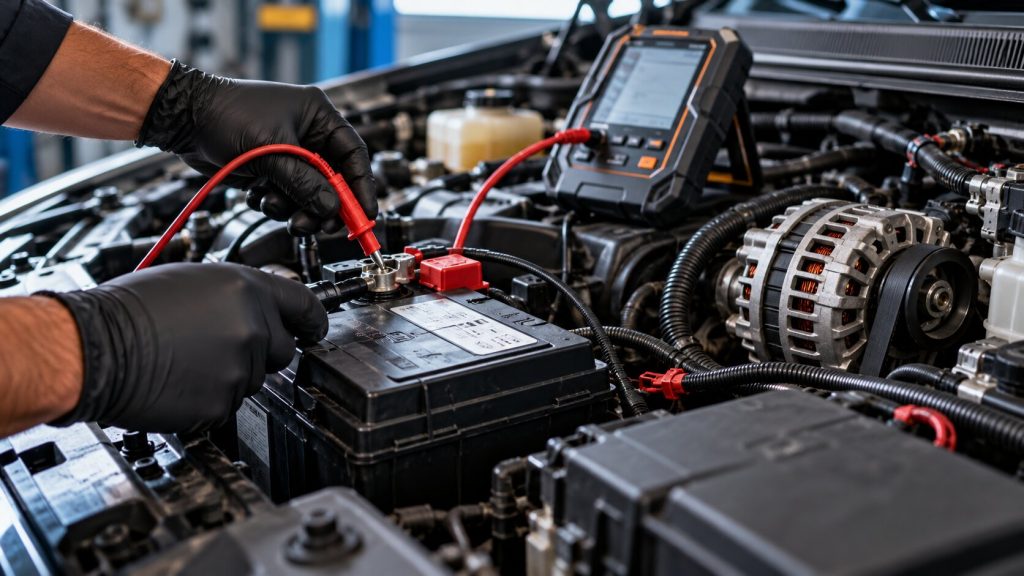
A vehicle that struggles to start on a cold morning does not always need a new battery. The cause may be a weak charging system, poor cable connection, excessive electrical draw, or a battery that cannot deliver enough current under load.
At Schmidt Auto Care in Springboro, electrical complaints often arrive with similar symptoms: slow cranking, dim headlights, warning lights, or electronics that reset after startup. One recent inspection involved a vehicle that appeared to have a battery problem based on the driver’s description. The battery voltage looked normal at rest, but additional testing showed the electrical system was not maintaining stable power.
The diagnosis required more than checking voltage with a meter. Battery capacity testing, alternator output checks, voltage-drop testing, and current draw measurements showed where the system was losing reliability.
Cold Ohio weather puts extra demand on every part of the starting and charging system. A battery that works during mild temperatures may struggle after several freezing nights, especially when combined with short trips, heated accessories, and aging electrical connections.
A Winter Electrical Diagnosis Starts With Measurements
The first step in an electrical diagnosis is confirming what the system is actually doing. Symptoms can point toward several possible causes, so testing narrows the issue before any parts are replaced.
Mechanics usually start by testing the battery and checking fuel lines when a car won’t start in the cold.
- Battery fill levels and the punch needed to get the car moving.
- Energy meets resistance inside cells.
- Measuring the total energy your alternator generates daily.
- Resistance in lines and terminals saps your electrical strength.
- Vehicles drain small amounts of juice while parked and locked.
A routine shop checkup recently revealed a very familiar problem. The driver reported slow starts after overnight parking, but a quick voltage check showed a normal reading. The battery failed its starting power test while the charging system showed that the alternator output was jumping around too much.
The team didn’t just look at one scan. They cross-referenced a few different reports to confirm the actual diagnosis. Testing the battery meant also testing the charging system and cables. You cannot fix one without looking at them all.
Battery Testing Shows More Than a Voltage Reading
Many drivers associate battery health with one number: voltage. While voltage is useful, it only shows part of the condition of a battery.
A fully charged battery may show around 12.6 volts when the vehicle is off. That does not confirm that it can provide enough current during engine startup.
Cold temperatures make this difference more noticeable because batteries produce less available energy while the engine requires more effort to crank.
Battery testing may include:
- Conductance testing to measure available starting ability
- Load testing to observe voltage stability during demand
- Internal resistance measurement
- Comparison between rated and available cold-cranking amps
A battery with increased internal resistance may still start a vehicle on warmer days. Once temperatures drop, the reduced capacity becomes easier to notice.
Drivers may experience:
- Slower engine cranking
- Clicking sounds during startup
- Interior lights dimming during ignition
- Electronics restarting after the engine starts
- A vehicle that needs occasional jump starts
Replacing a battery without checking the rest of the system can leave the original issue unresolved. A charging concern or excessive electrical draw may shorten the life of the replacement battery.
Alternator Testing Reveals Charging System Problems
The alternator keeps the battery charged and supplies electrical power while the engine runs. When charging output becomes unstable, the vehicle may experience electrical symptoms even with a newer battery.
A charging system inspection looks at several areas:
- Alternator voltage output
- Charging stability under electrical load
- AC ripple from alternator diodes
- Battery cable condition
- Ground connections
A healthy alternator produces steady electrical power. Damaged internal components, including diode issues, can allow unwanted electrical fluctuations into the vehicle system.
Alternator problems may appear as:
- Battery warning lights
- Flickering lights
- Repeated battery replacement needs
- Electrical accessories operating inconsistently
- A battery that repeatedly loses charge
Using an oscilloscope during charging system testing can reveal electrical ripple that a standard meter may not show clearly. This type of measurement helps separate a weak battery problem from an alternator issue.
Voltage Drop Testing Finds Cable and Connection Issues
Battery and alternator tests may show normal results while a vehicle still cranks slowly. In those cases, electrical resistance in cables or connections may be restricting current flow.
Power has to travel through battery terminals, cables, grounds, and electrical connections before reaching the starter and other components. Corrosion, loose connections, or damaged cables can create resistance that limits available power.
Voltage-drop testing measures the amount of electrical loss while the system is under load. During electrical inspections, we start by confirming whether the complaint is caused by battery capacity, charging output, cable resistance, or electrical draw. This test is especially useful because a connection can appear clean while still creating resistance internally.
A vehicle may have:
- A strong battery
- A properly charging alternator
- A starter that appears functional
Yet it can still crank slowly if electrical current cannot travel efficiently through the system.
Parasitic Draw Testing Locates Battery Drain Problems
Some battery issues occur while the vehicle is parked. Modern vehicles contain multiple computers and electronic modules that remain active for a period after shutdown.
Most systems eventually enter sleep mode and reduce their electrical demand. A problem occurs when a module, accessory, or circuit continues drawing more current than expected.
A parasitic draw inspection may involve:
- Allowing vehicle modules time to shut down
- Measuring current consumption after shutdown
- Checking individual circuits through fuse testing
- Identifying the system responsible for excessive draw
Common causes of excessive battery drain include:
- Aftermarket electronics
- Interior lights staying active
- Faulty control modules
- Charging accessories
- Electrical components that do not shut down correctly
The timing of the test matters. Checking current draw immediately after turning off the vehicle can create inaccurate results because many systems are still completing shutdown processes.
Ohio Winter Conditions Increase Electrical Demand
Southwest Ohio weather creates conditions that expose weak electrical systems. Freezing temperatures slow battery chemistry while increasing starting demands from the engine.
Vehicles around Springboro, Warren County, and nearby areas also experience daily driving conditions that influence electrical health.
Winter stress often comes from:
- Repeated cold starts
- Short-distance commuting
- Heated seats and defrosters
- Increased blower motor use
- Road salt and moisture around electrical connections
A vehicle used mainly for short trips may not run long enough for the alternator to fully replace the energy used during startup.
The result may be a battery that gradually loses reserve capacity even though the vehicle continues starting most days.
Electrical Testing Prevents Unnecessary Repairs
Electrical problems can create similar symptoms across different systems. A weak battery, alternator issue, cable resistance problem, or electrical drain may all appear as a starting concern.
Testing creates a clearer path by showing:
- Where voltage is being lost
- Whether the battery can supply current
- Whether the alternator is maintaining stable output
- Whether a circuit is drawing excessive power
Testing separates a weak battery from a charging problem or electrical drain before parts are installed. The test results show whether the repair belongs at the battery, alternator, wiring, or another electrical circuit.
Winter Warning Signs Worth Checking Early
Small electrical symptoms often appear before a complete no-start condition occurs. Addressing them early can prevent inconvenient problems during freezing weather.
Pay attention to:
- Slower-than-normal engine cranking
- Lights that dim during startup
- Repeated jump-start situations
- Battery replacement every few years without a clear reason
- Electronics resetting after ignition
- Charging warnings on the dashboard
These symptoms indicate the electrical system needs testing rather than assumptions.
Frequently Asked Questions
Can a battery show normal voltage and still be weak?
Yes. A battery can display normal resting voltage while losing the ability to provide enough current during engine cranking. Load testing and conductance testing reveal conditions that a basic voltage check cannot show.
How do technicians test an alternator?
Technicians check charging voltage, electrical output under load, and AC ripple from internal alternator components. These measurements show whether the alternator is supplying stable power.
Can bad battery cables cause starting problems?
Yes. Corroded or damaged cables can restrict electrical flow between the battery, starter, and vehicle ground. Voltage-drop testing identifies power loss through those connections.
How is a battery drain located after the vehicle is turned off?
A technician measures the vehicle’s current draw after electronic modules enter sleep mode. Circuit testing through fuses can identify which system continues using excessive power.
Does cold weather damage car batteries?
Cold weather reduces available battery capacity and increases starting demand. An aging battery that works in mild temperatures may struggle when temperatures fall below freezing.
Schedule an Electrical System Inspection in Springboro
Winter starting problems are often caused by electrical issues that can be identified before a vehicle leaves you stranded. Battery condition, charging output, wiring connections, and electrical draw all need to be checked together to understand what is happening.
Schmidt Auto Care provides electrical system testing for battery, alternator, wiring, and starting concerns. Visit the shop at 285a Hiawatha Trail, Springboro, OH 45066, United States for a complete electrical inspection before colder weather puts extra stress on your vehicle.