
Engine testing identifies the cause of hesitation, rough idle, and weak acceleration by measuring how fuel, airflow, ignition, and combustion systems operate. In Springboro, Schmidt Auto Care uses diagnostic data, fuel testing, electrical checks, and engine measurements to determine the source of drivability concerns before recommending repairs or replacing unnecessary parts.
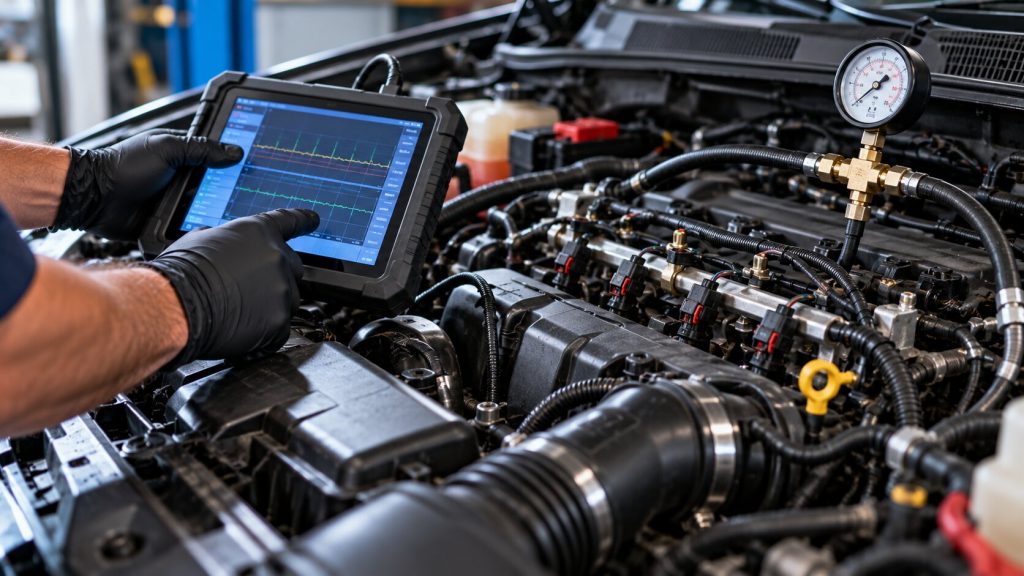
A hesitation during acceleration is often described in simple terms. The vehicle may feel weak, the engine may not respond smoothly, or the idle may feel rough while stopped at a light. The challenge is that the symptom does not always reveal the actual cause.
A vehicle recently arrived at Schmidt Auto Care with an intermittent hesitation complaint. The driver noticed the issue most during acceleration, but there was no warning light identifying a specific component. A scan provided useful information, but it could not explain why the vehicle felt different during real driving conditions.
The diagnosis focused on measurements instead of assumptions. Scan data, fuel system readings, electrical signals, and engine operating conditions were reviewed together to determine what changed when the problem occurred. Since fuel, airflow, ignition, and mechanical issues can create similar symptoms, accurate testing was needed to connect the driver’s complaint with the system actually causing the concern.
Starting With The Driver’s Experience
Before connecting any equipment, the conversation with the driver provides important information about where the diagnosis should begin. When the problem happens often matters as much as the symptom itself. A hesitation that appears during a cold start can point technicians in a different direction than one that shows up only after the engine warms up.
The conditions surrounding the concern also help narrow the possibilities. A vehicle that stumbles during acceleration may require a different testing approach than one that runs rough only while idling. Details such as changes during startup, differences when the air conditioning is running, changes in fuel economy, or recent repairs can provide useful direction.
These details help recreate the situation when the engine is not operating normally. A quick drive around the block may not reveal an issue that appears after several miles, during heavier acceleration, or under specific driving conditions. Understanding when the problem occurs allows testing to focus on the systems most likely involved.
Scan Data Shows The Direction For Further Testing
Modern engines constantly adjust fuel and air delivery based on information from sensors throughout the vehicle. A scan tool allows technicians to view those adjustments while the engine is running.
Fuel trim readings are one example. These numbers show how the engine computer is correcting the air and fuel mixture. If corrections become excessive, that tells the technician something is outside the expected range.
The important part is understanding what the numbers mean. A fuel correction issue can come from several areas, including an intake leak, injector concern, fuel supply problem, or inaccurate sensor reading.
During diagnosis, scan data is compared with other measurements. The computer can report that the engine is compensating, but it cannot always explain why that compensation is happening.
This is where additional testing separates one possible cause from another.
Fuel Delivery Testing Looks Beyond Error Codes
Fuel system problems often show up as hesitation, weak acceleration, or uneven engine operation. The engine needs consistent fuel delivery to maintain smooth combustion across all cylinders.
A common mistake is assuming a fuel-related symptom means an injector or fuel pump should immediately be replaced. The component may be involved, but testing is needed before making that decision.
During injector testing, we found the electrical command was correct, but the injector response was inconsistent compared with the others. A current probe can show how the injector operates when commanded by the engine computer.
A fuel pressure test provides another important measurement. Some fuel system concerns do not appear while the vehicle is sitting at idle. The system may maintain pressure during basic testing but struggle when the engine demands more fuel during acceleration.
The results show whether the injector, fuel supply, or electrical control is actually creating the problem.
Intake Leaks Can Change Engine Operation
The engine needs the correct amount of air entering through the intake system. When unmeasured air enters through a leak, the computer may adjust fuel delivery to compensate.
A small intake leak may create symptoms such as rough idle, inconsistent operation, or hesitation. Because the engine computer is constantly making adjustments, the issue may not always create an immediate warning light.
Smoke testing can be used to locate certain leaks in the intake system. Instead of guessing whether a sensor or component is responsible, the technician can look for where air is entering the system incorrectly.
Springboro vehicles experience a mix of short trips, commuting, and local driving conditions that can make certain concerns more noticeable. A vehicle that rarely reaches full operating temperature may show symptoms differently than one used mainly for longer highway drives.
Cylinder Testing Reveals Internal Engine Conditions
Sometimes fuel and airflow checks do not explain why the engine is running poorly. When that happens, testing moves deeper into the combustion process.
An engine can have acceptable scan data and still produce uneven power if one cylinder is not creating the expected combustion event. Ignition problems, valve concerns, or cylinder sealing issues can create symptoms that feel similar to fuel problems.
In-cylinder pressure testing provides a view of what happens inside the combustion chamber. A pressure transducer can show how the cylinder builds and releases pressure during operation.
Compression checks, cylinder contribution testing, and ignition waveform analysis may also be used depending on the complaint.
A recent Springboro vehicle arrived with hesitation during acceleration but no active fault codes. Fuel trim data showed the engine was adding fuel at idle, while smoke testing revealed an intake leak near the PCV connection. Repairing the leak corrected the mixture issue and restored smoother operation.
Electrical Testing Finds Problems Basic Checks Miss
Many modern engine components rely on precise electrical signals. Sensors, ignition coils, fuel injectors, and control modules all depend on accurate communication.
A component may appear normal during a visual inspection but behave differently when operating under actual conditions. A waveform can tell us whether we have a bad component or whether the component is being controlled incorrectly.
An oscilloscope allows technicians to view electrical patterns instead of only checking whether a signal exists. The shape, timing, and consistency of the signal can provide important clues.
For example, an ignition coil may receive the correct command but produce an inconsistent output. An injector may receive power but not operate mechanically as expected.
Testing these signals helps separate wiring concerns, component concerns, and control issues.
Springboro Driving Conditions Can Reveal Engine Concerns
Drivers often notice engine problems during everyday routines rather than during a repair shop test drive. A vehicle may feel fine during a short trip but hesitate during merging, climbing a hill, or accelerating onto a highway.
Springboro drivers regularly experience changing conditions throughout the year. Cold temperatures, repeated short trips, and stop-and-go driving can affect when certain concerns become noticeable.
Common signs that deserve attention include:
- A stumble when pressing the accelerator
- A rough idle after starting the engine
- Shaking while stopped in traffic
- Reduced fuel economy
- A change in how smoothly the vehicle responds
Small changes in how a vehicle drives can provide useful diagnostic information. Waiting until the problem becomes severe may make the cause more difficult to identify.
Accurate Testing Creates A Better Repair Decision
Engine diagnosis is not about replacing every component connected to a symptom. Several different systems can create the same driving complaint, which is why measurements matter.
A complete diagnostic process may involve reviewing scan data, checking fuel operation, testing intake systems, examining electrical signals, and evaluating cylinder operation.
The measurements are compared together to see where the engine stops operating normally. The final repair recommendation should be based on evidence from the vehicle, not assumptions based only on the symptom.
When hesitation, rough idle, or weak acceleration appears, professional testing can identify the system involved and provide a clearer direction for repair.
Frequently Asked Questions
Can a car have an engine problem without a check engine light?
Yes. The warning light is not always the first sign something is wrong. Many drivers notice a hesitation, rough idle, or change in how the vehicle responds before the computer stores a fault code.
Do I need more than a computer scan if my car is running rough?
In many cases, yes. A scan gives useful information, but it is only one part of the diagnosis. A vehicle can show normal-looking data while still having a problem that appears during acceleration, startup, or when the engine is under load.
What happens during engine testing at an auto repair shop?
The technician first checks the symptoms, then uses testing equipment to look at the systems involved while the engine is operating. This may include checking computer data, fuel operation, electrical signals, and other measurements based on what the vehicle is doing.
Should I wait until the problem gets worse before having my engine checked?
No. A small change in how the vehicle drives can provide useful clues. Getting the concern checked while the symptom is still consistent can make it easier to identify what is happening and avoid replacing parts that are not causing the issue.
Schedule Engine Diagnostic Testing In Springboro
If your vehicle is hesitating, running rough, or losing smooth acceleration, Schmidt Auto Care can inspect the systems involved and provide a clear diagnostic direction.
The shop uses diagnostic equipment to evaluate fuel delivery, airflow, electrical operation, and combustion concerns before recommending repairs.
Visit Schmidt Auto Care at 285a Hiawatha Trail, Springboro, OH 45066, United States, for professional engine diagnostic testing based on measurements from your vehicle.