
Short school-zone trips can affect batteries, brakes, tires, and engine oil because vehicles spend more time starting, idling, stopping, and warming up. In Springboro, seasonal temperature changes and winter road treatment add extra stress. Maintenance should consider trip length, idle time, driving conditions, symptoms, and mileage together.
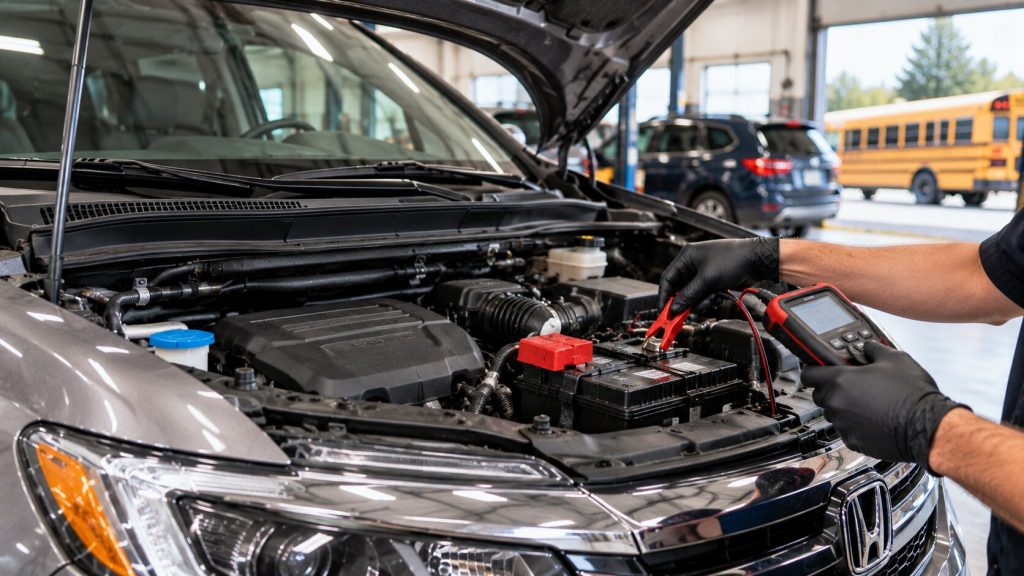
A family vehicle can cover very few miles during the school week while still going through dozens of cold starts, stop-and-go runs, and long waits in pickup lines. Around Springboro, short suburban routes combined with Ohio temperature swings and winter road treatment can be especially demanding on batteries, brakes, tires, and engine oil. For a school-run vehicle, mileage tells only part of the maintenance story; daily trip length, idle time, and number of cold starts matter too.
A minivan that travels only a few miles between home, school, and errands may spend much of each trip warming up. The battery supplies power for another start, the engine runs while the vehicle waits in line, and the brakes go through repeated low-speed stops before everything cools down again. Over months of the same routine, small maintenance issues can become much easier to notice.
Short School Runs Change The Maintenance Cycle
A typical school run does not resemble steady highway driving. The engine may start cold, idle while the family gets ready, travel a short distance, wait in traffic, and shut down soon after reaching school. The same sequence can happen again during afternoon pickup.
That routine matters because several vehicle systems are affected by operating time as well as mileage. Ten minutes spent idling in a pickup queue adds engine running time without moving the odometer very far, while repeated starts continue drawing energy from the battery. Repeated braking keeps the brake system working throughout the route, while potholes, curb contact, incorrect tire pressure, and alignment problems can show up as uneven tire wear.
When a school-run vehicle comes into the shop, its daily routine deserves to be part of the conversation. Useful details include:
- Typical distance from home to school
- Number of cold starts each day
- Time spent waiting in pickup or drop-off lines
- Frequent use of the heater, defroster, or air conditioning
- Mostly local driving versus regular highway driving
- Overnight parking indoors or outside
- Recent slow starting, brake noise, or uneven tire wear
A vehicle with 8,000 miles of mostly continuous driving has experienced a different operating cycle from one that reached the same mileage through frequent starts and short local trips. Maintenance decisions should account for that difference rather than relying on the odometer alone.
Battery Trouble Can Start With Repeated Short Trips
Slow cranking can become more noticeable when a vehicle is used mainly for short trips. Each start draws energy from the battery, while brief drives provide less time for the charging system to replenish it. Cold weather and an aging battery can make the problem more noticeable.
School traffic can add electrical demand from defrosters, lights, climate control, heated seats, and other accessories. A battery may also show acceptable voltage while parked but struggle once the starter places it under load. Testing during starting, along with a charging system check, helps separate a weak battery from charging, cable, or connection problems.
For repeated starting trouble, the check may cover:
- Battery condition and starting capacity
- Voltage during engine cranking
- Charging-system operation
- Battery terminals and cables
- Electrical draw after shutdown when symptoms support the test
A discharged battery does not always need replacement. Charging and retesting can show whether it remains serviceable, while a battery that stays weak after a full charge may need replacement. Continued discharge can point to a charging-system problem or electrical draw that needs further testing.
Idling Adds Hours Without Adding Many Miles
Waiting in a school pickup line feels easy on a vehicle because the engine is barely working and the odometer is hardly moving. The engine is still accumulating operating time, however, and accessories may remain switched on throughout the wait. That difference becomes important when maintenance is judged only by mileage.
A vehicle can therefore have relatively low annual mileage while experiencing a large number of starts and considerable idle time. Short local trips may also end before the engine oil has spent much time at its normal operating temperature. This is one reason the owner’s manual and the vehicle’s actual use matter when choosing a maintenance schedule.
Longer driving occasionally gives a healthy vehicle more time to reach normal operating temperature and recharge its battery. It cannot restore a weak battery, correct an electrical drain, free a sticking brake component, or repair another mechanical problem. Symptoms that continue after normal driving call for testing rather than progressively longer trips.
Repeated Stops Put The Brakes To Work
School traffic creates a particular kind of brake use. Instead of several firm stops during a longer drive, the vehicle may creep forward a few feet, stop, move again, and repeat that cycle through a queue. Add morning moisture or winter road treatment, and low-speed brake noise may become more noticeable.
Cast-iron brake rotors can develop light surface rust while a vehicle sits, especially after rain, snow, washing, or exposure to road treatment. Some surface material clears during normal braking, but persistent squealing, grinding, vibration, pulling, or drag deserves an inspection. Brake noise alone does not identify which part needs replacement.
The shop needs to look at the physical brake components before recommending parts. Pad condition, rotor surfaces, caliper movement, and brake hardware can reveal whether the complaint comes from normal surface corrosion, worn friction material, sticking components, or another issue. Measurements become useful when vibration, uneven wear, or another symptom points toward a rotor concern.
Replacing brake pads because they squeak can leave the original source of the noise untouched. Pad wear, rotor condition, caliper movement, and brake hardware should point to the repair before new brake parts are recommended.
School Traffic Can Be Hard On Tires
School traffic can make existing tire problems easier to spot, especially after curb contact, pothole impacts, or weeks of driving with incorrect pressure. Tight turns into parking areas, repeated low-speed steering, curb contact, potholes, and daily maneuvering can expose existing alignment or suspension issues through uneven tread wear. As temperatures change through the Springboro school year, tire pressure changes with them, so a tire that was correctly inflated earlier in the season may need another check.
A tire inspection should go beyond looking at whether tread remains in the center. The inside and outside shoulders can wear differently, and feathering across the tread may point toward an alignment concern. Sidewalls also need a visual check for cuts, bulges, cracking, or damage from curb contact.
Watch for signs such as:
- One shoulder wearing faster than the other
- Different tread depth across the same tire
- Steering wheel sitting off-center
- Vehicle pulling during normal driving
- Frequent need to correct tire pressure
- Vibration that increases with road speed
- Sidewall damage after curb or pothole contact
Uneven wear gives alignment testing a legitimate place in the inspection. An alignment should follow evidence such as abnormal tread wear, steering complaints, suspension work, or impact damage rather than being automatically added to every school-zone maintenance visit. Worn suspension parts should also be addressed before an alignment when they affect wheel position.
Short Trips Affect Engine Oil Differently
Engine coolant can warm fairly quickly, but engine oil generally needs more time to reach and remain at full operating temperature. A trip that ends shortly after leaving home may therefore shut the engine down while much of the vehicle is still warming. Repeat that routine several times a day and the engine spends a large portion of its running time in warm-up conditions.
Small amounts of moisture and fuel can enter engine oil during normal cold operation. Longer periods at normal operating temperature give volatile contaminants more opportunity to leave the oil, while repeated short trips reduce that opportunity. How much contamination remains depends on the engine, outside temperature, trip length, and the vehicle’s condition.
An unexpected increase in oil level, persistent fuel odor, warning light, rough cold start, unusual idle, or noticeable change in fuel economy deserves investigation. None of those symptoms identifies a specific defective component on its own, so the next step should follow testing rather than assumption. If the oil level keeps rising or a strong fuel odor persists, those symptoms deserve investigation before changing service intervals or replacing engine parts.
Springboro Weather Adds Seasonal Stress
Springboro drivers also deal with conditions that change throughout the school year. Hot summer afternoons put heavy demand on air conditioning and cooling systems, while freezing mornings increase starting demands and bring heaters and defrosters into regular use. Tire pressure also changes with ambient temperature, making seasonal pressure checks worthwhile.
Winter road treatment adds another concern underneath the vehicle. Salt and brine can remain on exposed metal components, including brake and suspension parts, long after the road surface looks dry. Regular inspections can catch corrosion, sticking brake hardware, or damaged components before they become more noticeable from the driver’s seat.
Potholes and rough pavement can affect tires, wheels, steering, and suspension components, particularly after a hard impact. A new vibration, steering pull, damaged tire, or suddenly off-center steering wheel after hitting a pothole should be checked rather than waiting for the next routine service.
A School-Run Vehicle Needs A Focused Check
Consider a family minivan used mainly for school drop-off, afternoon pickup, grocery runs, and other short trips around Springboro. It arrives with slower morning cranking, squealing brakes during the first few stops, and noticeable wear along one tire shoulder. Those complaints point toward three separate inspections instead of one large package of replacement parts.
Battery testing can show whether the starting issue comes from low charge, an aging battery, charging trouble, or another electrical concern. Removing the wheels gives the technician a direct view of pad condition, rotor surfaces, and caliper hardware, while tread measurements show whether the tire wear is isolated or consistent with an alignment issue. The owner also gets a chance to mention the daily trip length and extended pickup-line idling, which provides useful context for engine oil and maintenance decisions.
That sequence keeps unrelated components out of the repair estimate until there is a reason to inspect them. Fuel-system parts, suspension components, alignment adjustments, and other repairs should enter the discussion when symptoms or inspection results point in their direction. A short school commute by itself does not prove that a particular component needs replacement.
School-Run Maintenance Priorities
Paying attention to changes in how the vehicle starts, stops, steers, and drives provides a practical way to decide when an inspection makes sense. The vehicle’s maintenance schedule should also reflect the operating conditions described in its owner’s manual.
During the school year, keep an eye on:
- Slow or inconsistent engine cranking
- Battery or charging warnings
- Persistent brake squeal, grinding, or vibration
- Vehicle pulling during braking or normal driving
- Uneven tire wear
- Repeated loss of tire pressure
- Unusual engine oil level changes
- Rough starting or unusual idle behavior
- New steering vibration after a pothole impact
A single symptom may have a simple explanation, while repeated changes deserve closer attention. Bringing those details to the shop makes the diagnostic process more focused because the technician knows what happens, when it happens, and how the vehicle is normally driven. That is especially useful for intermittent complaints that may disappear by the time the vehicle reaches the service bay.
Frequently Asked Questions
Can short school trips drain a car battery?
Yes. Repeated short trips may not give the charging system enough driving time to replace energy used during starting. Cold weather, heavy accessory use, and an aging battery can make slow cranking more noticeable.
Does sitting in a school pickup line affect vehicle maintenance?
Yes. Idling adds engine operating time while adding little mileage. Frequent pickup-line idling also keeps electrical accessories running, so mileage alone may not reflect how much the vehicle is actually being used.
Why do my brakes squeak during the school run?
Brake squeal can come from moisture, light rotor corrosion, brake dust, pad material, or brake hardware. Persistent squealing, grinding, pulling, or vibration should be inspected rather than treated as an automatic sign that new brake pads are needed.
Can school traffic cause uneven tire wear?
School traffic itself does not automatically cause uneven tire wear. Incorrect tire pressure, potholes, curb impacts, alignment problems, and worn steering or suspension parts are more direct causes. Uneven shoulder wear or feathering deserves an inspection.
Are short trips bad for engine oil?
Repeated short trips can be harder on engine oil. The engine may shut down before the oil spends much time fully warmed, allowing moisture and small amounts of fuel to remain longer. Follow the maintenance schedule appropriate for your vehicle and driving conditions.
Schedule A School-Run Vehicle Check In Springboro
Slow starts, persistent brake noise, uneven tire wear, and changes in the way a vehicle drives are easier to address when the inspection follows the actual complaint. If the battery cranks slowly after repeated school runs, the brakes stay noisy after the first few stops, or one tire is wearing differently from the others, bring those symptoms to Schmidt Auto Care for targeted testing.
If your minivan, SUV, crossover, or sedan spends most mornings and afternoons in school traffic, mention that driving routine when scheduling service. Include any recent changes in starting, braking, steering, tire wear, or engine operation so the inspection can begin with the systems connected to those symptoms. Bring your school-run vehicle to Schmidt Auto Care at 285a Hiawatha Trail, Springboro, OH 45066, United States, and mention the trip length, idle time, and symptoms you’ve been noticing.