
Engine shuddering during acceleration can signal an ignition misfire, worn spark plug, electrical issue, fuel problem, or mechanical fault. For new Springboro drivers, a flashing Check Engine Light requires prompt attention because continued misfiring can damage the catalytic converter. Diagnosis should confirm the cause before any parts are replaced.
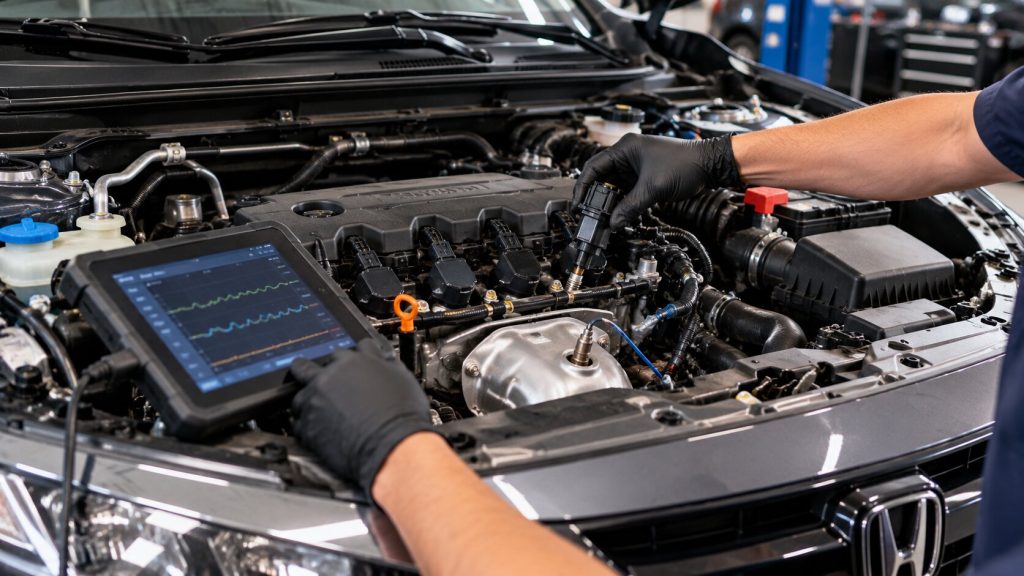
A first car that shudders during acceleration can have an ignition misfire, worn spark plug, electrical problem, fuel-delivery issue, or mechanical problem. On a 2017 Honda Civic, the timing of the shudder and the behavior of the Check Engine Light provide useful clues, but they do not identify the defective part by themselves. If the Check Engine Light flashes while the engine is shaking, limit driving and arrange diagnosis because an active misfire can overheat the catalytic converter.
Shuddering Engine and the Signs To Watch
Engine shuddering often becomes most noticeable when pulling away from a stop, climbing a grade, or pressing the accelerator harder than usual. A new driver may feel vibration through the seat or steering wheel, notice hesitation, or hear the engine running unevenly. When those symptoms repeat, they deserve more attention than an occasional change in engine sound.
Pay attention to the conditions surrounding the problem. Note whether the engine was cold or warm, whether the shudder appeared at idle or during acceleration, and whether the Check Engine Light remained steady or started flashing. Those details give a technician a better starting point than simply reporting that the car “runs rough.”
Warning signs worth recording include:
- Shuddering during acceleration
- Rough or uneven idle
- Hesitation after pressing the accelerator
- Noticeable loss of power
- Repeated shaking at low engine speeds
- A steady Check Engine Light
- A flashing Check Engine Light
A phone note is enough to keep track of an intermittent problem. Record when the symptom happened, what the vehicle was doing, and whether any warning lights appeared at the same time. That information becomes especially useful when the Civic behaves normally after reaching the shop.
A Flashing Check Engine Light Needs Prompt Attention
A steady Check Engine Light means the vehicle computer has detected a problem that requires diagnosis. A flashing Check Engine Light generally indicates a severe active misfire, especially when the engine is also shaking, stumbling, or losing power. During a severe misfire, unburned fuel can enter the exhaust and raise catalytic-converter temperatures quickly.
For a first-time owner, knowing that distinction can prevent an expensive mistake. A steady light may allow time to arrange service depending on how the vehicle is running, while a flashing light with strong shuddering calls for prompt attention. Avoid hard acceleration and unnecessary driving while the engine is actively misfiring.
The warning light still does not tell you which component to buy. Trouble codes narrow the diagnostic direction, but several different problems can produce the same misfire code. Replacing parts from the code alone can turn a straightforward diagnosis into repeated repair bills.
Ignition Coils And Spark Plugs Need To Be Checked Together
A Civic that shudders under acceleration may have an ignition problem that becomes more obvious when the engine is under load. Each ignition coil supplies the voltage needed for its spark plug to ignite the mixture inside a cylinder. A worn plug, damaged coil boot, weak coil, contamination, or electrical connection problem can interrupt that process.
Carbon tracking is one condition worth checking when the coil and plug are removed. It can appear as a thin dark line along the spark plug porcelain or inside the coil boot, showing where ignition voltage has traveled along an unwanted path. Installing a new coil while leaving a damaged or carbon-tracked plug in place can allow the misfire to return.
During an ignition inspection, a technician may look for:
- Carbon tracks on spark plug porcelain
- Burn marks inside the coil boot
- Cracked or hardened boot material
- Worn or damaged spark plugs
- Oil or moisture inside the plug well
- Loose or corroded electrical terminals
- Damaged coil wiring
The inspection should match what the vehicle is doing on the road. Some ignition problems appear under acceleration while the engine seems smooth at idle, which is why a quick listen in the parking lot may not reproduce the complaint. Testing under the appropriate operating conditions gives the technician more useful information.
Springboro Conditions Can Affect An Aging Vehicle
Springboro’s changing temperatures and damp conditions can make an existing ignition or electrical problem easier to notice. Moisture around damaged insulation or electrical connections can contribute to unwanted electrical discharge, while years of heating and cooling can age rubber boots, seals, and wiring. Weather provides useful diagnostic context, but the defective component still has to be identified through inspection and testing.
Winter salt and brine also make electrical connections worth checking on vehicles that have spent years in southwest Ohio. Corrosion can increase electrical resistance when it reaches exposed connectors or grounds, although road treatment should never be assumed to be the cause of an engine misfire. Physical evidence matters more than a seasonal assumption.
Short trips around Springboro can make intermittent symptoms easy to dismiss. A Civic might stumble briefly when accelerating toward SR-73 and then feel normal once cruising speed is reached. If that behavior starts repeating, record it and arrange an inspection before the shudder becomes constant.
Diagnose Before Ordering Parts
A misfire code should guide the inspection, not become a parts order. At Schmidt Auto Care, stored and pending codes can be checked alongside available misfire data before replacement parts are chosen. P0301 through P0304 point to misfire activity on a specific cylinder, while P0300 indicates random or multiple-cylinder misfires.
A P0302 code, for example, points to cylinder two but does not confirm that its ignition coil needs replacement. The cause could be the spark plug, coil, injector, wiring, air-fuel mixture, or a mechanical problem inside that cylinder. The plug, coil boot, connector, and wiring can be inspected first, with testing moving to fuel delivery or cylinder condition when the ignition system does not explain the shudder.
A focused diagnostic path may include:
- Scan stored and pending trouble codes and review misfire data.
- Inspect the spark plug, coil, boot, connector, and wiring on the affected cylinder.
- Test ignition operation when the visual inspection does not identify the cause.
- Check fuel delivery or cylinder condition when ignition tests point elsewhere.
Advanced electrical testing may be needed when the Civic shudders only under certain driving conditions. First-time owners do not need to interpret the measurements themselves, but they should ask which test supports the recommended repair. The answer should connect the vehicle’s symptoms, diagnostic data, physical inspection, and the part being replaced.
First-Car Maintenance Habits Matter
Keeping a first car reliable requires more than reacting to warning lights. Maintenance records, routine checks, and attention to changes in the way the vehicle drives can reveal problems before they become roadside breakdowns. The owner’s manual should remain the primary reference for scheduled maintenance because service intervals vary by vehicle and engine.
Keep records for:
- Oil changes
- Tire service and rotations
- Brake work
- Battery replacement
- Spark plugs
- Filters
- Fluid services
- Diagnostic inspections
- Repairs and replacement parts
Record the date and mileage whenever possible. A digital photo of each invoice is enough to create a useful service history, especially when the car was purchased and used without complete records. Those records also prevent uncertainty about whether a maintenance item was completed recently or several years ago.
Pay attention to changes between scheduled services as well. New noises, vibrations, fluid spots, warning lights, steering changes, brake noises, slow starting, or unusual smells can signal that the vehicle needs attention before its next routine appointment. Repeated symptoms deserve inspection even when the car continues to start and drive.
Prioritize Repairs By Urgency
A used first car may need several services at once, and every recommendation does not carry the same urgency. Problems involving braking, steering, severe overheating, damaged tires, major fluid loss, strong fuel odors, or a flashing Check Engine Light can require faster action than routine maintenance approaching its scheduled interval. Ask the shop to explain which items affect immediate operation and which can be planned for a later visit.
Engine shuddering should be diagnosed when it repeats, particularly when it becomes stronger under acceleration. Continued severe misfiring can place additional stress on the exhaust system, while an intermittent problem may become harder to ignore as the underlying condition worsens. Early diagnosis can also prevent unnecessary parts replacement by identifying the affected system while the symptom can still be reproduced.
Keep the written estimate and add completed work to the vehicle’s service records.
Schedule Diagnostic Service In Springboro
If your Civic or other first car repeatedly shudders, hesitates, loses power, or develops a flashing Check Engine Light, arrange a diagnostic inspection rather than guessing which component has failed. Bring any maintenance records you have and describe when the problem occurs, including whether the engine is cold or warm and whether the warning light stays steady or flashes. These details can help reproduce an intermittent complaint and guide the initial inspection.
Schmidt Auto Care can scan engine data, inspect ignition components, check electrical connections, and continue into fuel or mechanical testing when the initial checks point away from the ignition system. For a new owner, the important outcome is understanding what caused the symptom and which test supports the recommended repair.
For engine shuddering, Check Engine Light diagnosis, or first-car maintenance in Springboro, schedule service with Schmidt Auto Care at 285a Hiawatha Trail, Springboro, OH 45066, United States. Tell the shop exactly when the shudder occurs and bring available service records rather than trying to select the replacement part beforehand. A diagnosis based on the vehicle’s symptoms and test results provides a clearer repair direction.
Frequently Asked Questions
Can a bad ignition coil make my first car shake when accelerating?
Yes. A weak ignition coil can cause a cylinder to misfire during acceleration, when the ignition system is working under greater demand. Spark plugs, electrical connections, fuel issues, and mechanical problems can create similar symptoms, so the coil should be tested or inspected before replacement.
Should I keep driving if the Check Engine Light is flashing?
No. A flashing Check Engine Light generally indicates a severe active misfire that can send unburned fuel into the exhaust and overheat the catalytic converter. Avoid unnecessary driving and arrange diagnosis promptly, particularly when the vehicle is shaking, hesitating, or losing power.
Does a misfire code tell me which part to replace?
No. A misfire code identifies the misfire detected by the vehicle computer, but it does not automatically identify the defective component. The spark plug, ignition coil, injector, wiring, or mechanical condition may still need to be checked.
Can Springboro weather make an ignition problem worse?
Yes. Damp conditions and temperature changes can make an existing insulation or electrical problem more noticeable, particularly when a boot, seal, wire, or connector has already deteriorated. The weather provides diagnostic context, while inspection and testing determine the actual repair.
What records should a first-time car owner keep?
Keep invoices and records for oil changes, tires, brakes, batteries, spark plugs, filters, fluid services, inspections, and repairs. Record the mileage and date for each service so future maintenance decisions are based on documented history. Digital copies are useful when the vehicle changes shops or paper receipts are lost.
Which vehicle problems should a new driver handle first?
Prioritize problems involving brakes, steering, overheating, damaged tires, major fluid leaks, strong fuel odors, and a flashing Check Engine Light. Routine maintenance can then be planned according to the owner’s manual, vehicle condition, mileage, and service history. When an estimate contains several recommendations, ask which repairs affect immediate operation and which can be scheduled.