
Transmission diagnostics help identify developing problems before major repairs are needed. By checking shift behavior, electronic control data, transmission fluid condition, and hydraulic operation, technicians can determine whether a concern involves service, component repair, or deeper damage. Early testing gives drivers clearer answers and helps avoid unnecessary transmission replacement.
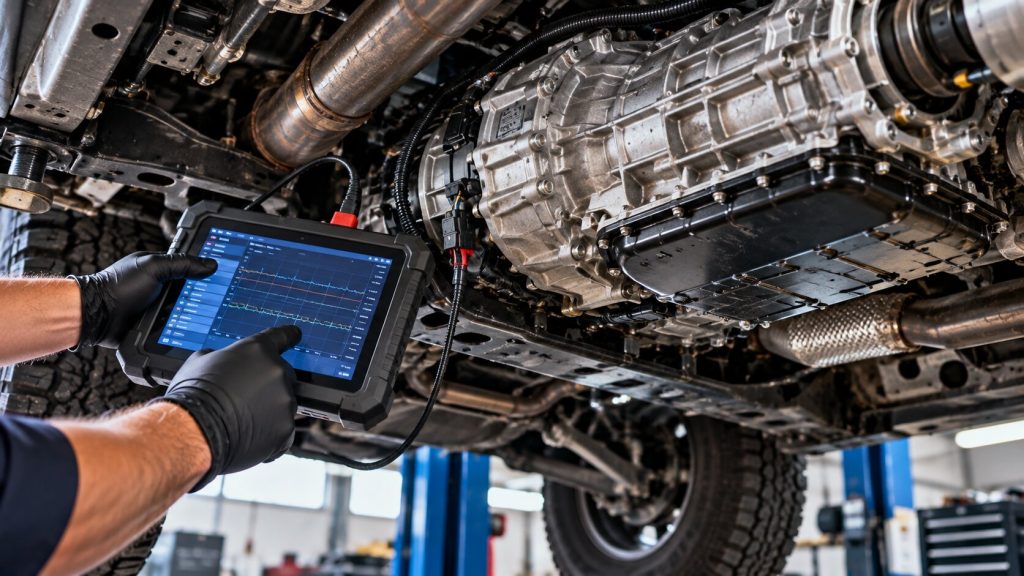
A 2017 GM Silverado 1500 arrived at Schmidt Auto Care with a transmission complaint that started as a minor driving concern but became more noticeable over time. The owner described a harsh shift during morning driving, delayed engagement when selecting Drive, and a vibration that felt similar to traveling over a rough section of pavement during light acceleration. The dashboard showed no warning light, but the vehicle’s changing behavior indicated that the transmission needed a closer inspection.
This Silverado was a good example of why transmission diagnostics should happen before a major repair becomes necessary. A basic scan for trouble codes would not have provided enough information because modern transmissions can develop drivability concerns before a warning light appears. The inspection required looking at how the transmission shifted, how the electronic controls responded, and what condition the fluid was in.
The diagnostic process focused on identifying the source of the concern instead of assuming the transmission needed replacement. Road testing, scan data, fluid inspection, and additional testing provided a clearer picture of what was happening inside the 8L90 transmission. This approach gives drivers a better understanding of whether they are dealing with a service issue, a component concern, or more extensive internal damage.
A Silverado Transmission Inspection In Springboro
The first part of the inspection involved recreating the same conditions that caused the driver’s complaint. Transmission concerns can change depending on temperature, driving speed, and how the vehicle is being used throughout the day. A concern that appears during a cold morning commute may not feel the same after the transmission reaches normal operating temperature.
During the road test, attention was placed on the timing of the harsh shift, the conditions that created the vibration, and how the transmission responded during acceleration. The Silverado was evaluated under driving conditions similar to what many Springboro drivers experience during daily commuting near SR-73 and I-75. These details helped narrow down which areas required additional testing.
The purpose of this first step was not to make assumptions about the repair. A transmission symptom can have several possible causes, including fluid condition, electronic control operation, hydraulic concerns, or component wear. Understanding when the problem occurs creates a more accurate path for diagnosis.
Shift Behavior Provides Early Warning Signs
Drivers are usually the first to notice transmission changes because they experience how the vehicle feels during everyday use. A change in shift quality, engagement time, or acceleration smoothness can indicate that something inside the transmission system has changed. These symptoms often appear before a vehicle reaches the point where it cannot be driven.
The Silverado’s harsh shifting and shudder complaint provided important information about how the transmission was operating. A vibration during torque converter clutch operation points technicians toward a different area than a vibration caused by tires, engine operation, or suspension concerns. Matching the symptom to the driving condition is an important part of the diagnostic process.
Transmission diagnostics are not only about identifying what is broken. They are also about determining what is still operating correctly so unnecessary repairs can be avoided. This allows repair decisions to be based on test results rather than guesses.
Electronic Controls And Transmission Data
Modern automatic transmissions rely on electronic systems to manage gear changes, pressure control, and clutch operation. The transmission control module constantly receives information from sensors and adjusts operation based on driving conditions. Because of this, checking only stored trouble codes may leave important information out of the diagnosis.
During the Silverado inspection, electronic data was reviewed to see how the transmission was responding during operation. Information such as torque converter clutch activity, transmission temperature, shift adjustments, and pressure commands can provide insight into how the system is functioning. This type of testing helps identify whether the transmission is responding correctly to the commands it receives.
A vehicle can have a noticeable transmission concern while the control module has not yet stored a diagnostic code. The computer may recognize unusual activity without determining that the issue has reached the threshold for a warning light. Reviewing live information provides a more complete view of what is happening while the vehicle is being driven.
Fluid Condition And Internal Transmission Health
Transmission fluid plays an important role inside an automatic transmission because it supports hydraulic operation, lubrication, and clutch engagement. Over time, heat and driving conditions can affect the condition of the fluid and the way the transmission operates. Fluid inspection provides useful information when diagnosing shifting concerns.
During a transmission evaluation, technicians inspect for signs such as overheated fluid, unusual odor, excessive contamination, or material that may indicate internal wear. The Silverado inspection included checking fluid condition because the torque converter clutch system can be affected by changes inside the transmission. These details were considered along with electronic information and driving symptoms.
Fluid condition alone does not determine the repair direction. A transmission concern requires looking at multiple areas together because similar symptoms can come from different sources. Combining the fluid inspection with other diagnostic information creates a clearer picture of the transmission’s condition.
Hydraulic Operation And Valve Body Testing
The valve body controls how fluid pressure moves through the transmission during gear changes. Inside the 8L90, electronic solenoids work with hydraulic circuits to apply clutches and manage shifting. When pressure control changes, drivers may notice symptoms such as rough shifts, delayed engagement, or inconsistent operation.
Hydraulic testing can provide additional information when electronic data does not fully explain the complaint. It allows technicians to evaluate whether the transmission is creating the pressure needed during different operating conditions. This information helps separate control concerns from mechanical problems.
Electrical testing may also be used to evaluate solenoid operation. A component can receive the correct electronic command but still have a mechanical issue affecting how it responds. Looking at both electronic and hydraulic operation provides a more complete understanding of the transmission system.
Driving Conditions Around Springboro
Local driving conditions can influence when transmission concerns become noticeable. Many Silverado owners use their trucks for a combination of short trips, commuting, hauling, and highway driving. These different situations place the transmission through a variety of operating conditions.
Cold mornings can make existing transmission concerns easier to notice because fluid takes longer to reach normal operating temperature. Stop-and-go traffic can also create more frequent gear changes and repeated torque converter clutch operation. These situations can reveal concerns that may not appear during a short test drive.
Understanding how a vehicle is used helps technicians recreate the problem more accurately. A transmission complaint is easier to diagnose when the inspection reflects the same conditions the driver experiences. This is why customer information and road testing are important parts of the process.
Choosing Repairs Based On Diagnosis
A transmission concern does not automatically mean the vehicle needs a complete replacement. The correct repair depends on what testing shows about the condition of the transmission system. Diagnosis provides information that helps determine whether the issue involves service, a specific component, or more extensive repairs.
For the Silverado, the inspection focused on separating possible causes instead of immediately recommending major work. A shudder complaint may involve torque converter clutch operation, while a harsh shift may involve electronic control or hydraulic operation. Each concern requires evaluation based on the actual symptoms and test results.
Drivers benefit from understanding what is happening before approving expensive repairs. A detailed diagnostic process provides a clearer explanation of the condition and the available repair options. This reduces uncertainty and helps prevent unnecessary replacement of parts.
Addressing Transmission Concerns Before They Grow
Many transmission issues begin with changes that seem small during everyday driving. A slight hesitation, occasional vibration, or delayed engagement may not seem urgent at first. Continuing to drive without an inspection can allow additional stress on transmission components.
Early diagnosis gives technicians the opportunity to identify developing concerns before they become larger repair situations. It also provides more information about whether the issue can be addressed with a targeted repair. Waiting until a transmission stops working often limits the available options.
The Silverado inspection showed why diagnostic testing matters before major transmission problems develop. By evaluating the symptom, electronic information, fluid condition, and transmission operation together, technicians can make a more informed repair recommendation.
Frequently Asked Questions
Can transmission problems appear before a warning light comes on?
Yes. A transmission can develop noticeable shifting concerns before the control module stores a diagnostic trouble code. Live data testing can reveal changes that basic code scanning may not show.
Does transmission diagnosis involve more than checking codes?
Yes. Transmission diagnosis includes reviewing driving symptoms, electronic information, fluid condition, and mechanical operation. These areas work together to identify the source of the concern.
Can transmission fluid conditions affect shifting?
Yes. Fluid conditions can influence hydraulic operation and clutch engagement. Heat, age, and contamination can change how a transmission behaves during normal driving.
Does a harsh shift mean the transmission needs replacement?
No. A harsh shift can come from several areas, including electronic controls, hydraulic operation, fluid concerns, or individual components. Testing helps determine the appropriate repair approach.
Why should transmission problems be checked early?
Early diagnosis can identify developing concerns before additional damage occurs. It also helps determine available repair options before a larger transmission repair becomes necessary.
Schedule A Transmission Diagnostic Inspection In Springboro
If your Silverado is starting to shift harder, hesitate when going into gear, or shudder during acceleration, it is worth having the transmission checked before the issue gets worse. At Schmidt Auto Care, the inspection process looks beyond warning lights by reviewing transmission data, fluid condition, and how the vehicle behaves during a road test.
The right repair starts with knowing what is actually causing the problem. A diagnostic inspection can help determine whether the concern is related to fluid condition, electronic controls, hydraulic operation, or a component that needs attention.
Schedule a transmission diagnostic inspection with Schmidt Auto Care at 285a Hiawatha Trail, Springboro, OH 45066 to get a clearer answer about what is happening with your vehicle before a smaller concern turns into a larger repair.