
Family SUV maintenance in Springboro should cover tires, brakes, suspension, fluids, battery condition, and manufacturer-scheduled service. Road salt, potholes, temperature changes, short trips, and passenger loads can accelerate wear. Regular inspections based on vehicle condition and service history can identify developing problems before they affect daily driving or longer trips.
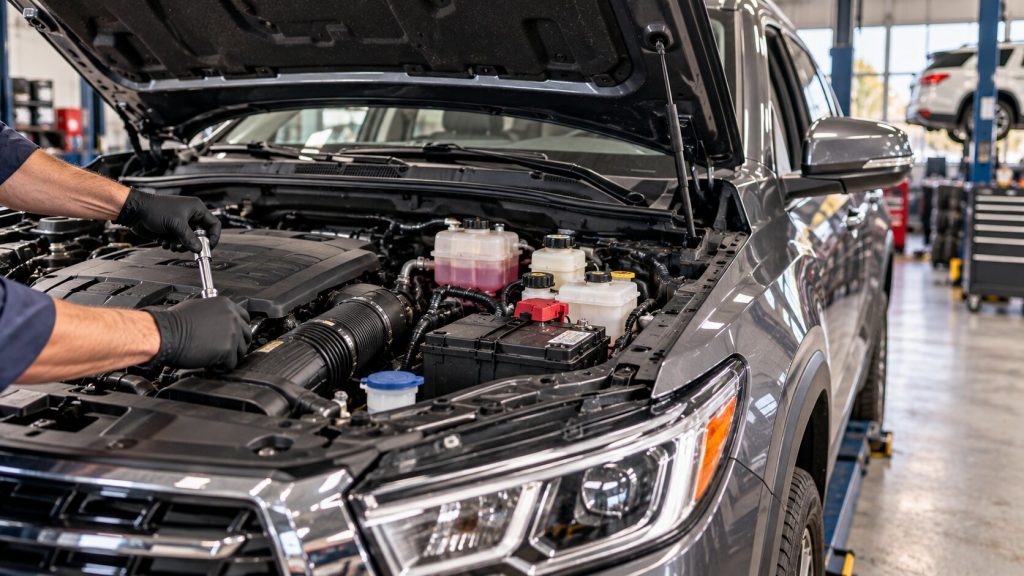
Family SUV maintenance in Springboro should cover tire condition, brakes, suspension and steering, engine oil and fluids, battery condition, and manufacturer-scheduled service. Winter road salt, potholes, temperature swings, short trips, and frequent passenger or cargo loads can change when individual components need inspection.
At Schmidt Auto Care, an SUV maintenance visit starts with the condition of the vehicle rather than assumptions based only on mileage. Tire wear can point toward an alignment or suspension concern, brake feel can reveal wear that deserves inspection, and fluid condition can change the next service decision.
SUV Maintenance Priorities For Springboro Driving
A larger vehicle places substantial weight on its tires, brakes, steering, and suspension. Add passengers and cargo, and those systems continue working under changing loads throughout the week. Maintenance should account for the way the SUV is actually driven rather than treating every vehicle with the same mileage as having the same needs.
Springboro driving brings its own conditions into the shop. Winter moisture and road salt reach exposed suspension and brake components, while potholes and rough pavement can affect tires, wheels, and alignment. Summer heat also puts added demand on batteries, cooling systems, and tires during longer highway drives.
For a family SUV, these areas deserve regular attention:
- Tires and tire pressure
- Brake pads, rotors, and brake fluid
- Suspension and steering components
- Engine oil and filters
- Coolant and other vehicle fluids
- Battery and charging system
- Wheel alignment
- Manufacturer-scheduled services
The owner’s manual remains the starting point for scheduled maintenance because requirements differ by manufacturer, engine, drivetrain, and model year. Vehicle condition can create additional service needs between scheduled intervals. A tire damaged by a pothole, for example, should be addressed when the damage occurs rather than waiting for the next scheduled service.
Tire Condition Deserves More Than A Quick Tread Check
SUV tires carry substantial weight, especially with passengers and cargo. Low pressure, poor alignment, or worn suspension parts can accelerate wear and concentrate it along one edge. A tire may look healthy across the center while the inner shoulder is already worn.
We check the full tread for inner-edge wear, feathering, cracking, and impact damage. On a recent three-row SUV with recurring rear tire wear, the tread looked acceptable from the outside, but the inner shoulder was heavily worn. That pointed the inspection toward alignment and suspension movement before replacing the tire.
Drivers can check several things at home:
- Check pressures when the tires are cold using the vehicle manufacturer’s specification.
- Inspect the full tread width, including the inner shoulder.
- Look for cuts, bulges, cracks, exposed material, or embedded objects.
- Pay attention to vibration, pulling, or changes in steering feel.
- Have recurring uneven wear inspected before replacing another tire.
Follow the manufacturer’s guidance for tire rotation intervals. Rotation can even out normal wear, but it cannot correct poor alignment or loose suspension parts. If abnormal wear returns, check the underlying cause before installing another set of tires.
Suspension Wear Can Show Up In The Tires
A family SUV that begins wandering over bumps or requiring frequent steering corrections deserves more than another alignment appointment. Worn control arm bushings, ball joints, steering components, or subframe mounts can allow wheel position to change as road forces act on the vehicle. The driver may notice the change first on uneven pavement, bridge joints, potholes, or during braking.
One useful shop check is inspecting suspension components with the vehicle supported in a position that allows relevant joints and bushings to be evaluated under load. Some movement can be difficult to reproduce when the suspension is hanging freely on a lift. Combining a physical suspension check with tire-wear observations and alignment measurements gives a clearer picture of where the problem originates.
Watch for symptoms such as:
- Clunking over potholes or driveway entrances
- Rear movement after crossing expansion joints
- Steering that requires frequent correction
- Uneven or rapidly returning tire wear
- Pulling or drifting on a relatively level road
- A loose sensation during braking or cornering
Springboro winters can make existing wear more apparent. Moisture, salt, slush, and repeated temperature changes reach components underneath the vehicle, while deteriorated rubber boots may allow contamination into moving joints. Rough pavement adds repeated impacts to parts that may already have years of service behind them.
Brake Condition Matters On A Loaded SUV
Brake wear is particularly important on a vehicle regularly carrying children, adults, groceries, sports equipment, or vacation luggage. More vehicle mass means the braking system must manage more energy when slowing the SUV. Driving habits, terrain, brake design, towing, traffic, and vehicle load can all influence how quickly individual components wear.
Brake inspection should consider more than remaining pad material. Rotor condition, fluid condition, hoses, calipers, hardware, and visible leaks can change the repair decision. A driver should also report changes in pedal feel because those details can help direct the inspection.
Several symptoms deserve attention:
- Grinding or scraping while braking
- Squealing that continues during normal stops
- Steering-wheel vibration during braking
- Brake pedal pulsation
- Vehicle pulling while stopping
- A brake pedal that feels different from normal
- Brake or ABS warning lights
A dashboard warning should be diagnosed rather than cleared and ignored. Some brake concerns are mechanical, while others involve ABS sensors or related electronic systems. The correct repair depends on identifying which system produced the symptom or warning.
Oil And Fluid Service Should Match The Vehicle
Modern SUVs do not share one universal oil-change schedule. Oil type, engine design, driving conditions, manufacturer requirements, and the vehicle’s oil-life monitoring system can all influence service timing. Following the specifications for the particular SUV is more useful than relying on a single mileage rule for every vehicle.
Family use can also involve frequent short trips. School drop-offs, shopping trips, practices, and local errands may give the engine less continuous operating time than a longer highway commute. Owners should follow the manufacturer’s maintenance schedule while also paying attention to service recommendations for the way the vehicle is used.
Other fluids may require inspection or scheduled service depending on the SUV:
- Engine coolant
- Brake fluid
- Transmission fluid
- Transfer-case fluid on applicable AWD or 4WD vehicles
- Differential fluid where applicable
- Windshield washer fluid
Fluid requirements vary significantly between manufacturers. Using an incorrect fluid can create expensive problems, so specifications matter as much as fluid level. Any unexplained drop in fluid level should also be checked for a leak rather than repeatedly topped off.
Battery Trouble Can Interrupt A Family Schedule
A weak battery often becomes obvious at an inconvenient time, especially when an SUV is needed for work, school, or an appointment. Slow cranking, intermittent starting trouble, electrical warnings, or repeated jump-starts justify testing the battery and charging system.
Temperature extremes affect batteries differently, and both winter cold and summer heat can contribute to starting problems. Corroded terminals or poor connections may also create symptoms that resemble a weak battery. Checking the battery, terminals, and charging voltage together prevents a good battery from being replaced for a connection or charging issue.
Modern SUVs also place significant electrical demand on the battery. Heated seats, power accessories, infotainment equipment, driver-assistance systems, and numerous control modules all depend on stable electrical supply. Have starting or charging problems checked before a family trip rather than risking a no-start away from home.
Routine Service Goes Beyond Oil Changes
An oil change is only one part of maintaining an SUV. Filters, belts where applicable, hoses, wipers, lights, fluids, and other service items have different replacement or inspection schedules. AWD and 4WD models can also have drivetrain components that require attention beyond the engine and transmission.
Use the owner’s manual as the baseline for scheduled service, then compare it with the SUV’s current condition and service history.
Useful routine checks may include:
- Reviewing oil and filter service history.
- Inspecting tires and recording abnormal wear.
- Checking brake condition.
- Looking over steering and suspension components.
- Checking visible fluid levels and signs of leakage.
- Testing the battery when condition or symptoms justify it.
- Reviewing manufacturer maintenance due by mileage, time, or vehicle indication.
Service records are useful here. They reduce uncertainty about whether a fluid, filter, or other maintenance item has already been addressed. Keeping invoices or a digital maintenance history can also make planning the next service easier.
Family Trips Need A Different Pre-Drive Check
An SUV that handles short Springboro trips without obvious trouble may still deserve attention before a long interstate drive. Sustained highway speeds, a full passenger load, luggage, and summer temperatures place different demands on the vehicle than a ten-minute trip across town. Tires, brakes, fluids, and cooling-system condition become especially important before extended travel.
Tire pressure should be checked against the vehicle manufacturer’s specification before the SUV is heavily loaded. Check the spare tire or emergency tire equipment as well, especially if it has gone untouched for years. Wipers, exterior lights, washer fluid, and warning lights are simple items that can make a major difference once bad weather or nighttime driving begins.
For families planning a longer trip, consider checking the SUV before the departure date rather than the morning of the drive. That leaves time to address a worn tire, brake concern, weak battery, fluid leak, or other service need without disrupting travel plans. It also avoids turning a routine inspection into a last-minute repair decision.
A Practical Maintenance Rhythm For Family SUVs
There is no single mileage schedule that fits every SUV, but owners can still build a practical routine around frequent visual checks and the manufacturer’s service schedule. Tire pressure and visible condition can be monitored regularly, while scheduled shop visits provide opportunities to examine areas that are difficult to assess in a driveway. Changes in sound, steering, braking, or tire wear should move an inspection forward rather than waiting for the next routine appointment.
Springboro’s seasonal changes make spring and fall useful times to pay closer attention to vehicle condition. After winter, tires, suspension parts, brakes, and the underside of the vehicle may show the effects of salt and rough pavement. Before colder weather returns, battery condition, tires, wipers, fluids, lights, and heating or defrost operation deserve another look.
A maintenance reminder can indicate that scheduled service is due, while a new clunk, vibration, warning light, fluid spot, or steering change signals a separate concern.
SUV Maintenance In Springboro
Schmidt Auto Care services family SUVs with attention to the vehicle’s current condition, manufacturer requirements, and the symptoms the driver reports. Tires, brakes, suspension components, alignment, fluids, battery condition, and scheduled maintenance can be evaluated according to what the vehicle actually needs. Bringing previous service records can make it easier to separate completed maintenance from work that is approaching.
If your SUV is due for routine service, developing uneven tire wear, making suspension noise, or showing a change in braking or steering, schedule an inspection at Schmidt Auto Care, 285a Hiawatha Trail, Springboro, OH 45066, United States. Mention any recent changes in how the vehicle drives, stops, starts, or sounds when arranging the visit.
Frequently Asked Questions
How often should a family SUV be serviced?
Follow the maintenance schedule specified for your SUV. Service intervals vary by manufacturer, engine, drivetrain, mileage, and driving conditions. Frequent short trips, towing, heavy loads, and extensive idling may require additional maintenance, so check the owner’s manual for the schedule that applies to your vehicle.
Can uneven tire wear mean my SUV has a suspension problem?
Yes. Worn suspension or steering components can contribute to uneven tire wear, especially along the inner or outer tread. Alignment, tire pressure, and wheel damage can cause similar wear, so recurring problems should be checked with a suspension inspection and alignment measurement.
Should SUV brakes be checked before a family road trip?
Yes. Check the brakes before a long trip if service is due or you notice squealing, grinding, pulsation, pulling, warning lights, or changes in pedal feel. An inspection can evaluate the pads, rotors, fluid, and related brake components before the SUV is loaded with passengers and luggage.
Does road salt affect SUV suspension and brake components?
Yes. Road salt and moisture can contribute to corrosion on exposed suspension, brake, and underbody components. Damaged protective boots can also allow contamination into moving joints, so excessive corrosion or deteriorated rubber components should be inspected for their mechanical condition.
What should I check on my SUV before a long family drive?
Check the tires, brakes, fluids, battery, lights, wipers, and dashboard warning lights before leaving. Tire pressure and tread condition deserve particular attention, along with the spare tire or emergency tire equipment. Have any existing vibration, leak, clunk, braking issue, starting problem, or steering change inspected before the trip.