
Winter vehicle preparation in Springboro should cover the battery, tire pressure and tread, brakes, heating and defrost systems, coolant, lights, and electrical connections. Checking these areas before freezing temperatures arrive can identify worn components, weak starting capacity, poor visibility, and other concerns before winter driving around Five Points becomes more demanding.
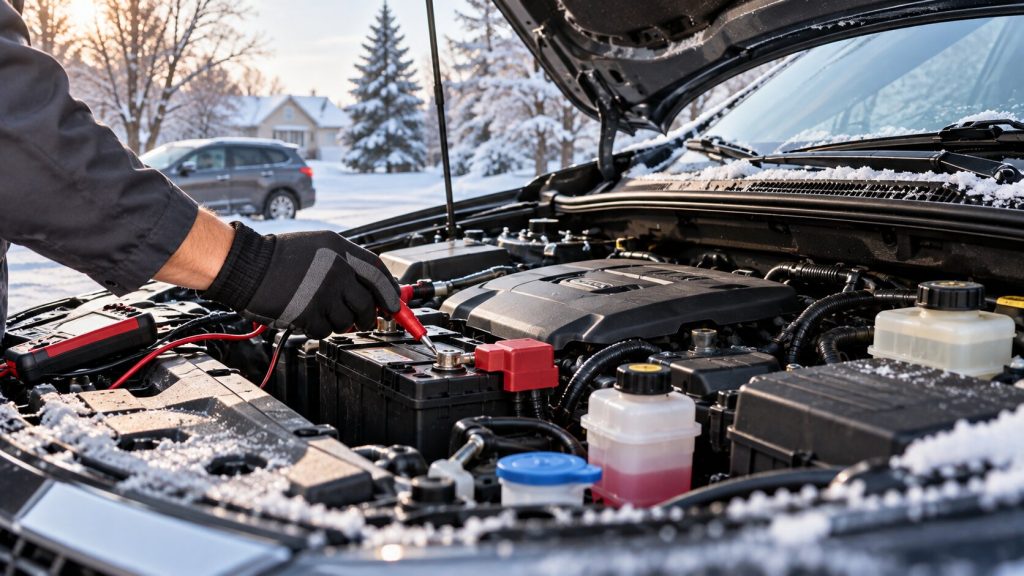
Cold mornings around Five Points can expose a weak battery, low tire pressure, poor defroster output, worn brakes, or an electrical problem that seemed minor during warmer weather. At Schmidt Auto Care, winter preparation focuses on checking these systems before freezing temperatures make an existing problem harder to manage. For Springboro drivers, that means testing the vehicle based on its actual condition rather than replacing parts simply because winter is approaching.
Short trips around Springboro deserve particular attention during cold weather because the vehicle may face repeated cold starts while the heater, defroster, lights, and other electrical equipment are running. Tire pressure also falls as temperatures drop, while road salt and brine add another seasonal concern for brakes, electrical connections, and exposed components. A pre-winter inspection gives drivers time to address those issues before the first difficult morning commute.
Start With The Battery Before The First Freeze
A battery can start normally in mild weather and struggle once temperatures fall below freezing. Cold conditions reduce the energy available from a lead-acid battery while the starter has to work against a colder engine. Battery age, repeated short trips, terminal corrosion, and an underlying charging problem can make slow winter cranking more likely.
In the shop, a useful battery check goes beyond measuring voltage while the vehicle is sitting in a service bay. The battery should be tested for its ability to support starting demand, followed by checks of the terminals, main cables, and charging system when the results call for them. That separates a worn battery from a discharged battery or a poor electrical connection.
Five Points drivers should pay attention to changes that appear during the first colder mornings:
- Slower engine cranking
- Clicking before the engine starts
- Recent jump-starts
- Lights dimming heavily during startup
- Corrosion around battery terminals
- Intermittent starting problems
Waiting for a no-start can turn a battery issue into an inconvenient winter roadside problem. Testing before sustained freezing temperatures gives the shop a chance to identify a weak battery while the vehicle still starts consistently. It also prevents an automatic battery replacement when a cable or charging issue is actually responsible.
Check Tire Pressure And Tread For Winter Roads
Tire pressure changes as outdoor temperatures fall, so a tire that was properly inflated during warmer weather may be underinflated on a cold morning. Pressure should be checked when the tires are cold and adjusted according to the vehicle manufacturer’s specification on the door-jamb placard. The number molded into the tire sidewall represents a different specification and should not be treated as the vehicle’s normal inflation target.
Tread condition matters just as much on wet, slushy, or snow-covered roads around Springboro. A tire can still hold air while having uneven wear, cracking, damage, or insufficient tread for the conditions the driver expects to encounter. Checking all four tires also gives the technician an opportunity to spot wear that may point toward an alignment or suspension concern.
Before winter, the tire inspection should cover:
- Cold tire pressure
- Remaining tread depth
- Uneven wear across the tread
- Sidewall cuts, cracking, or bulges
- Condition of the spare tire when equipped
- Tire age and overall condition
Drivers should continue checking pressure during winter rather than treating the pre-season inspection as the last check until spring. A sharp temperature change can alter pressure even when there is no puncture. The tire-pressure monitoring system is useful for warnings, but routine manual checks remain worthwhile.
Heating And Defrosting Need To Work Before Snow Arrives
Weak cabin heat can become a visibility problem when the windshield needs warm airflow for defrosting. Before freezing weather arrives, the heater and front and rear defrost systems should be operated long enough to confirm that they respond correctly. Weak airflow, air that stays cold after the engine warms up, unusual smells, or windows that remain difficult to clear deserve further inspection.
At the shop, poor heat does not automatically lead to a heater-core replacement. Coolant level and condition, engine operating temperature, coolant circulation, HVAC controls, and heater output can all affect what comes through the vents. Checking those areas first keeps the diagnosis tied to the actual symptom.
Coolant deserves attention during the same visit because its winter job extends beyond controlling engine temperature. A refractometer can check freeze protection, while a visual inspection can identify low fluid, contamination, or signs of leakage around hoses and connections. Coolant color alone cannot establish whether the fluid has adequate freeze protection or whether the correct coolant is in the system.
Brakes Need More Than A Quick Pad Check
Winter brake preparation should consider the condition of the system as a whole rather than focusing only on remaining pad thickness. Road brine, moisture, temperature changes, and existing corrosion can affect exposed brake hardware, while worn tires can change how effectively the vehicle responds when braking on slick pavement. Drivers who already hear grinding, persistent squealing, or feel vibration should have the cause checked before snow and ice add another variable.
A brake inspection can look at pad and rotor condition, visible hydraulic components, hoses, and areas where corrosion or wear may affect operation. The technician can also check for uneven wear that suggests one wheel is behaving differently from the others. Brake fluid condition and service history can be reviewed according to the requirements for the specific vehicle.
Some symptoms deserve attention before the next freeze:
- Grinding during braking
- A brake pedal that feels different than usual
- Vehicle pulling during braking
- Steering-wheel or pedal vibration
- Persistent brake warning lights
- Visible fluid loss
Braking distance on winter roads depends heavily on available tire grip, so brake and tire condition should be considered together. A healthy braking system cannot create traction that the tires do not have.
Winter Electrical Loads Can Expose Weak Connections
Cold-weather driving places several electrical demands on the vehicle at once. Headlights, the blower motor, rear-window defroster, heated seats, wipers, and other equipment may operate while the charging system is also replenishing energy used during startup. Short drives around Springboro can provide less charging time between repeated starts, particularly when the battery is already aging.
Electrical checks can begin with the battery terminals and main connections before moving to charging voltage and other tests when symptoms justify them. Corrosion, loose connections, damaged cables, and charging problems can create starting complaints that resemble a weak battery. Testing the system under operating conditions provides more useful information than relying on a parked battery-voltage reading alone.
Exterior lighting also deserves a walk-around before winter weather reduces visibility. Headlights, brake lights, turn signals, hazard lights, and license-plate lights should operate consistently, while wipers and windshield washers need to clear road spray without leaving the driver’s view obscured.
Road Salt And Freeze-Thaw Weather Change The Inspection
Springboro’s winter road treatment can leave salt and brine across wheel wells, brake components, suspension hardware, electrical connections, and the underside of a vehicle. Existing corrosion or a small coolant seep may become more apparent during repeated temperature swings. The inspection should focus on actual deterioration, leakage, loose connections, and damaged components rather than assuming that every area exposed to road salt requires replacement.
Five Points and nearby Springboro roads also involve plenty of lower-speed, stop-and-go driving. The location itself does not cause battery, brake, or cooling-system problems, but repeated short trips can combine cold starts with heater, defroster, lighting, and other electrical demands. That driving profile makes battery condition and charging-system checks particularly useful before winter settles in.
Drivers can also reduce winter trouble with a few routine habits between service visits. Keep road-salt buildup from accumulating for long periods, watch for new warning lights, and investigate changes in starting, braking, steering, or cabin heat while they are still consistent enough to reproduce. A symptom that repeatedly appears on cold mornings gives the technician useful information when the vehicle reaches the shop.
A Pre-Winter Checklist For Five Points Drivers
Winter preparation works best when it happens before the forecast calls for an overnight freeze. The exact checks vary with vehicle age, mileage, service history, and existing symptoms, so every vehicle will not need the same repairs or maintenance.
Before sustained freezing temperatures arrive, check:
- Battery condition, terminals, and starting behavior
- Charging-system operation when battery symptoms are present
- Cold tire pressures and remaining tread
- Tire damage and uneven wear
- Heater and windshield defroster operation
- Coolant level, freeze protection, and visible leaks
- Brake condition and existing brake symptoms
- Headlights, brake lights, turn signals, and hazard lights
- Windshield wipers and washer operation
- Visible hoses, connections, and exposed components for deterioration
Drivers should also keep a winter emergency kit appropriate for the trips they make. Useful items can include an ice scraper, flashlight, warm clothing or a blanket, phone charging cable, and basic emergency supplies. Longer winter trips may justify additional supplies based on the route and weather forecast.
Schedule Winter Vehicle Preparation In Springboro
Schmidt Auto Care can inspect your battery, tires, heating and defrost systems, brakes, coolant, lighting, and related electrical components before freezing temperatures settle into Springboro. If the vehicle already has slow cranking, weak heat, unusual brake behavior, a warning light, or another winter-related symptom, mention it when scheduling so the inspection can focus on the conditions you have actually experienced. Schedule your winter vehicle inspection at Schmidt Auto Care, 285a Hiawatha Trail, Springboro, OH 45066, United States before the next stretch of freezing weather.
Frequently Asked Questions
When should I prepare my vehicle for winter in Springboro?
Before sustained freezing temperatures arrive. An early inspection gives you time to address weak batteries, worn tires, brake concerns, or heating problems before the first major cold spell.
Does cold weather make a weak car battery worse?
Yes. Cold temperatures reduce available battery output while the engine requires more energy to start. An aging battery or poor electrical connection may become much more noticeable on freezing mornings.
Should I check tire pressure before winter?
Yes. Tire pressure drops as temperatures fall, which can affect tire wear and handling. Check pressure when the tires are cold and use the recommended pressure listed on the vehicle’s door-jamb placard.
Does weak heat mean the heater core needs replacement?
No. Low coolant, thermostat trouble, restricted coolant flow, or an HVAC issue can also cause weak cabin heat. Testing the cooling and heating systems first helps identify the actual cause.
Should brakes be inspected before winter?
Yes. Worn brakes, fluid leaks, corrosion, or existing braking symptoms should be addressed before snow and ice arrive. Tire condition also matters because available traction directly affects braking on slippery roads.
Which electrical components should be checked before winter?
Check the battery, terminals, charging system, exterior lights, wipers, washers, and defrosters. Slow starting, dimming lights, warning messages, or intermittent electrical problems should also be inspected before freezing weather.