
Before an Ohio fall road trip, inspect tire pressure and tread, brakes, engine oil, coolant, battery condition, lights, wipers, steering, suspension, and dashboard warnings. Cooler temperatures, rain, and longer highway drives can expose existing problems, so address fluid leaks, starting trouble, brake changes, and warning lights before departure.
Ohio fall travel can put a vehicle through cool morning starts, wet pavement, changing tire pressures, and hours of interstate driving in the same day. Drivers leaving Springboro should pay particular attention to symptoms that appeared recently, including slow starting, warning lights, fluid loss, steering changes, or a different brake-pedal feel. Those symptoms can determine which parts of a pre-trip inspection need closer attention.
At the shop, the first questions are usually simple ones about what the driver has noticed recently. A car that needs a jump after a cool morning gets a different inspection focus from one with a steering pull, soft brake pedal, or low-tire-pressure warning. Those details keep the inspection focused on the vehicle in front of the technician instead of treating every fall road trip the same way.
Tires Need More Than A Pressure Check
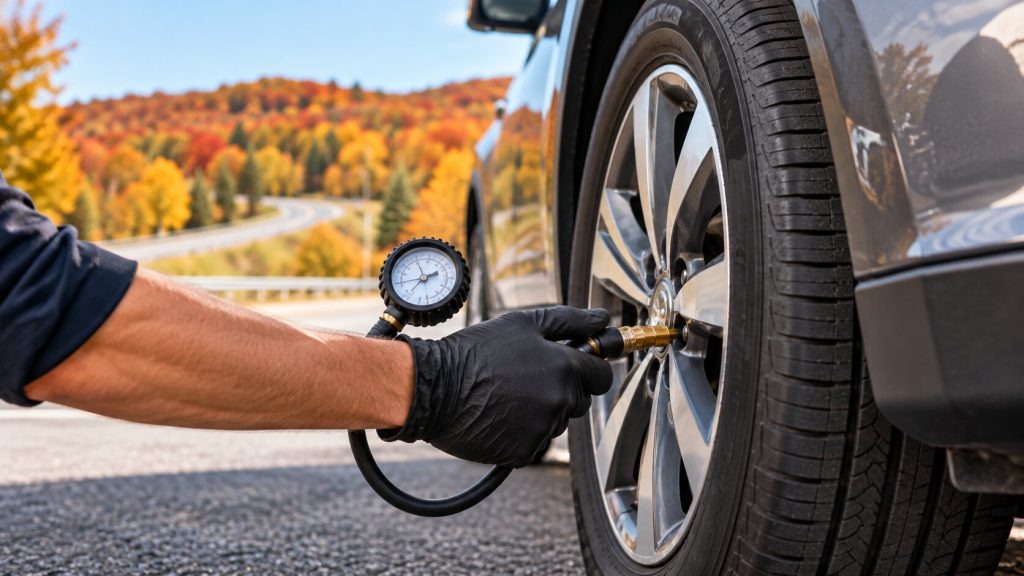
Fall temperature changes can affect tire pressure, making an existing pressure issue more noticeable on a cool Springboro morning. Pressure should be checked when the tires are cold and adjusted to the vehicle manufacturer’s specification on the tire information label. The maximum pressure printed on the tire sidewall is not the vehicle’s recommended inflation pressure.
Tread condition deserves equal attention before a trip down I-75. A tire can have acceptable pressure while showing shoulder wear, cracking, damage, or an irregular tread pattern that deserves inspection before sustained highway use. Tire age should also be considered, particularly when a vehicle travels relatively few miles each year and still has plenty of visible tread.
Before leaving, check:
- Cold tire pressure on all four tires
- Spare tire pressure if the vehicle carries a conventional spare
- Tread depth and irregular wear
- Sidewalls for cuts, bulges, or cracking
- Tire age
- TPMS warnings
- Wheel damage
Uneven wear can point toward inflation, alignment, steering, or suspension concerns rather than a problem with the tire alone. If the steering wheel sits off-center or the vehicle consistently pulls on a level road, alignment measurements may be appropriate after the tires and suspension have been inspected. Replacing tires without addressing the source of abnormal wear can send the new set down the same path.
Brakes Should Feel Consistent Before The Trip
A long interstate drive is the wrong time to investigate a brake pedal that recently started feeling different. Before the trip, technicians can inspect brake pad thickness, rotor condition, flexible hoses, visible hydraulic components, and brake fluid while also checking for leakage or abnormal wear. The brake pedal should feel consistent during normal operation without an unexplained increase in travel.
Brake fluid deserves more than a glance at its color. Its condition, service history, and the vehicle manufacturer’s maintenance requirements provide better guidance on whether service is due. A soft pedal also requires diagnosis because fluid condition, air, leaks, hose problems, and other hydraulic issues can produce different versions of the same complaint.
Drivers should arrange an inspection before a road trip if they notice:
- A soft or unusually low brake pedal
- Grinding or scraping while braking
- New brake vibration
- The vehicle pulling while braking
- A brake or ABS warning light
- Fluid beneath the vehicle
- A sudden change in stopping feel
Repeated highway braking can generate substantial heat, particularly when the vehicle is carrying passengers and luggage. Existing brake concerns should be checked before the car spends hours at interstate speed. A controlled road test can also reveal braking complaints that are difficult to reproduce while the vehicle is stationary.
Engine Oil And Fluids Deserve A Pre-Trip Check
Engine oil should be checked for the correct level before a long drive, along with the vehicle’s service history and any signs of leakage. If an oil change is already due according to the manufacturer’s maintenance schedule or the vehicle’s oil-life system, taking care of it before the trip avoids carrying overdue maintenance into several hundred additional miles. An active oil-pressure warning requires diagnosis rather than simply adding oil and continuing the trip.
Coolant is particularly relevant as Ohio moves toward colder weather. The reservoir level, visible hoses, connections, and surrounding areas can be inspected for leakage or deterioration, while coolant service should follow the specification and interval for the particular vehicle. A vehicle that has recently overheated, lost coolant, or required repeated top-offs deserves further diagnosis before an extended drive.
Other fluid checks depend on the vehicle but can include:
- Engine oil
- Engine coolant
- Brake fluid
- Transmission fluid where service access and manufacturer procedures allow
- Power steering fluid on vehicles with hydraulic steering
- Windshield washer fluid
A fluid level that keeps dropping has a cause. Adding fluid may temporarily restore the level, but repeated loss can indicate a leak or another mechanical problem that needs attention. Tell the technician if the same reservoir has needed topping off more than once.
Cooler Mornings Can Expose A Weak Battery
A battery that started the engine throughout summer can begin showing trouble as temperatures fall. Slow cranking, intermittent starting trouble, dimming lights during startup, or a recent jump-start are useful reasons to test the battery before leaving Springboro. Battery condition matters even more when the trip includes early departures, overnight parking, or several days away from home.
Testing can assess battery condition rather than judging it only by whether the engine starts that morning. Terminals and cable connections should also be inspected for corrosion, looseness, or physical damage, while charging-system concerns can be investigated when the symptoms point in that direction. Battery age provides additional context when deciding whether a marginal test result deserves attention before the trip.
Do not ignore a vehicle that has needed a jump recently just because it starts normally afterward. The cause could involve the battery, charging system, electrical draw, loose connection, or another electrical concern. Sorting that out at home is considerably easier than dealing with a no-start after an overnight stop.
Wipers And Lights Matter More During Ohio Fall Weather
Fall driving around Springboro can mean rain, road spray, darker morning commutes, and earlier sunsets. Wiper blades should clear the windshield smoothly without leaving large streaks, and the washer system should deliver enough fluid to clean road film from the glass. A cracked blade or empty washer reservoir can become a significant visibility problem once rain starts on the interstate.
Walk around the vehicle with the lights switched on before packing for the trip. Headlights, brake lights, turn signals, hazard lights, taillights, and other required exterior lamps should operate correctly, while cloudy or damaged lamp housings may also deserve attention. Checking lighting before a fall trip becomes especially useful when more of the drive will take place before sunrise or after sunset.
Visibility checks should cover:
- Windshield wiper condition
- Washer fluid level and spray operation
- Headlights
- Brake lights
- Taillights
- Turn signals
- Hazard lights
- Windshield damage that interferes with the driver’s view
The windshield itself should also be examined before several hours of highway driving. Chips and cracks can affect visibility depending on their size and position, while a dirty interior surface can create distracting glare from headlights and low-angle sunlight. Clear glass, working washers, and functional exterior lights are simple checks with immediate practical benefit.
Steering And Suspension Problems Can Show Up In The Tires
Uneven tread wear can be the first visible clue that a steering, suspension, or alignment issue needs attention. Loose or worn components may also contribute to clunks, wandering, steering changes, or an unstable feel over bumps. These symptoms deserve inspection before the vehicle is loaded with passengers and luggage for a longer drive.
Alignment should be measured when the symptoms support it rather than automatically added to every road-trip visit. Tire wear, steering pull, an off-center steering wheel, recent suspension repairs, or a hard impact with a pothole are useful reasons to check wheel angles. Worn or damaged steering and suspension parts should be addressed before alignment adjustments are made.
Springboro-area driving can expose vehicles to potholes, rough pavement, construction areas, and seasonal road debris. One impact may be enough to damage a tire or wheel, while repeated road impacts can contribute to wear elsewhere in the chassis. Mention any recent pothole strike or curb impact when dropping the vehicle off for inspection.
Dashboard Warnings Need Diagnosis Before Highway Miles
A warning light that disappears after restarting the vehicle still deserves attention if it keeps returning. ABS, traction-control, TPMS, charging-system, engine-temperature, oil-pressure, and check-engine warnings each point toward different systems and should not be treated as interchangeable alerts. The next step depends on which warning appeared and what the vehicle was doing at the time.
An intermittent ABS or traction-control warning, for example, can require checking stored diagnostic information and wheel-speed data before anyone decides which component needs attention. A wheel-speed sensor, wiring issue, related wheel component, or another system fault may produce similar dashboard symptoms. Replacing an ABS module or sensor based only on the warning lamp can result in unnecessary repairs.
Tell the technician when the warning appears. Note whether it happens after rain, during braking, at highway speed, after the vehicle warms up, or immediately after startup. That information can narrow the diagnostic path considerably.
Ohio Fall Road Trip Checklist
Schedule the inspection several days before departure so there is time to diagnose a warning light, source a tire, or repair a leak. Check the spare tire or inflator equipment while there is still time to replace missing or expired items. Drivers should also confirm that the roadside equipment carried in the vehicle matches the way that vehicle is equipped.
| Area | What To Check |
| Tires | Pressure, tread, damage, age, irregular wear, TPMS |
| Brakes | Pedal feel, pads, rotors, hoses, fluid, warning lights |
| Engine | Oil level, leaks, unusual noises, overdue maintenance |
| Cooling system | Coolant level, visible leaks, hoses, recent overheating |
| Battery | Starting behavior, battery condition, terminals and connections |
| Visibility | Wipers, washer fluid, windshield, exterior lighting |
| Steering and suspension | Pulling, clunks, looseness, abnormal tire wear |
| Safety systems | ABS, traction-control, TPMS, and other active warnings |
| Road-trip equipment | Spare tire or inflator equipment and applicable roadside tools |
Check the owner’s manual for the equipment supplied with the vehicle because newer models do not all carry conventional spare tires and jacks. Some use temporary mobility or inflator kits instead, and those kits should be checked before departure. Roadside equipment is useful only when it is present, complete, and ready to use.
Fall Road Trip Inspections In Springboro
A pre-trip inspection should reflect the vehicle’s mileage, maintenance history, current symptoms, and the distance it is about to travel. At Schmidt Auto Care, the inspection can cover tires, brakes, fluids, battery condition, lighting, wipers, steering, suspension, and relevant dashboard warnings, with additional diagnosis directed by the symptoms the driver reports. Bring up recent jump-starts, fluid top-offs, warning lights, tire-pressure alerts, steering changes, brake changes, or unusual noises when scheduling the visit.
Drivers preparing for a longer Ohio fall trip can schedule service with Schmidt Auto Care at 285a Hiawatha Trail, Springboro, OH 45066, United States. Booking before the day of departure leaves time to address a worn tire, brake concern, weak battery, leak, or warning light before the vehicle is loaded for the highway. When scheduling, mention whether the problem appears during cold starts, braking, highway driving, or after the vehicle warms up.
Frequently Asked Questions
What should be checked before a fall road trip in Ohio?
Check the tires, brakes, engine oil, coolant, battery, lights, wipers, steering, suspension, and dashboard warnings. Also consider recent symptoms such as fluid loss, slow starting, unusual noises, steering pull, or changes in braking.
Can cooler fall weather affect tire pressure?
Yes. Tire pressure changes with ambient temperature, so cooler fall weather can trigger a low-pressure warning. Check pressure when the tires are cold and use the recommended pressure listed on the vehicle’s tire information label.
Should a car battery be tested before a long fall trip?
Yes, especially if the engine has been cranking slowly or the vehicle recently needed a jump-start. Testing the battery and checking its terminals and connections can catch a starting or charging concern before an extended trip.
Does a road-trip inspection include checking brake fluid?
Yes. Brake fluid level, condition, service history, and signs of leakage should be reviewed with the rest of the brake system. A soft or changing brake pedal needs further diagnosis rather than assuming the fluid alone is responsible.
Should an ABS warning light be checked before a road trip?
Yes. An ABS or traction-control warning should be diagnosed before a long highway trip. Stored diagnostic information and system testing can help determine whether the concern involves a wheel-speed sensor, wiring, another related component, or a different system fault.
Do I need an alignment before every long road trip?
No. An alignment is more relevant when there is uneven tire wear, steering pull, an off-center steering wheel, recent suspension work, or a significant pothole impact. Tires and suspension components should also be inspected before making alignment adjustments.