
Heatherwoode family vehicles used for school runs, errands, and short daily trips need maintenance based on driving conditions, not mileage alone. Tire wear, brake changes, battery condition, fluid history, suspension concerns, and new vibrations can signal developing problems. Tracking when symptoms occur can also make diagnosis more accurate.
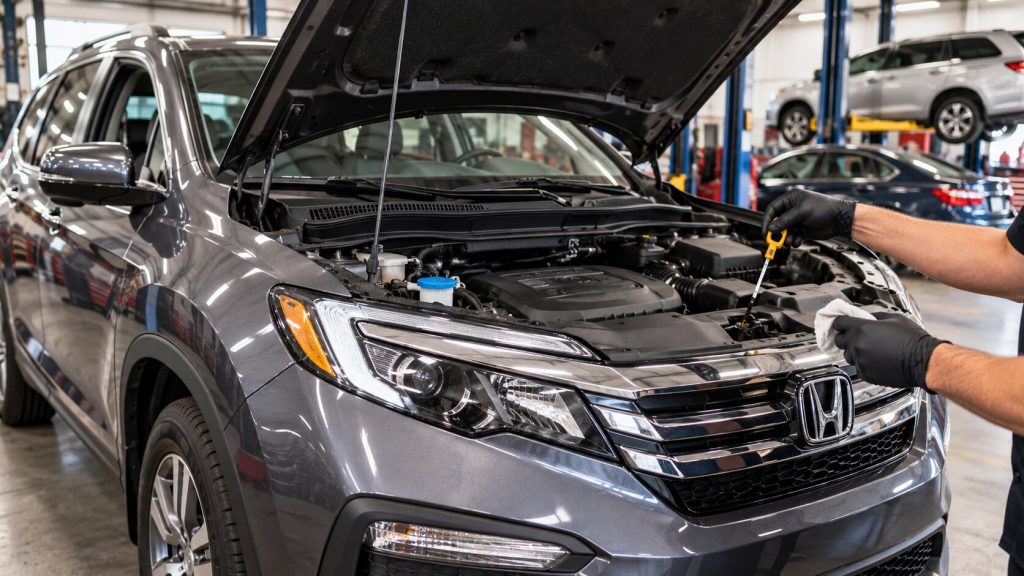
School transportation, grocery runs, short errands, practices, appointments, and repeated stop-and-go driving can put substantial use on an SUV, sedan, or minivan without adding dramatic highway mileage. Paying attention to fluid condition, tires, brakes, suspension changes, and new vibrations can catch developing problems before they interrupt the family schedule.
At Schmidt Auto Care, diagnosis often starts with when and where a symptom happens—vehicle speed, temperature, braking, acceleration, passenger load, and whether the problem disappears when driving conditions change.
Short Family Trips Can Be Hard On A Vehicle
A typical Heatherwoode family vehicle may travel only a few miles at a time. The engine starts, the vehicle heads to school, sits in a pickup line, drives home, and then repeats a similar routine for groceries or an afternoon activity. Mileage accumulates slowly, yet the vehicle goes through frequent starts, warm-up periods, braking events, and low-speed acceleration.
That routine makes maintenance history especially important. Drivers who judge service needs only by annual mileage can overlook how the vehicle is actually being used, particularly when most trips are short. Fluids, brakes, tires, batteries, and suspension components still age even when the odometer does not climb quickly.
A longer highway commute and a week of short school runs create different operating conditions. Neither automatically damages a vehicle, but the maintenance conversation should reflect the type of driving the family actually does. Heatherwoode owners should mention frequent short trips when discussing service intervals or an intermittent symptom with a technician.
School Pickup Traffic Can Reveal Transmission Problems
Stop-and-go traffic often exposes symptoms that are easy to miss during steady highway driving. Drivers may notice a hesitation when pulling away, an unusual shift, or a vibration during gentle acceleration after the vehicle has warmed up. The exact sensation and speed matter because tires, engine operation, transmission behavior, and driveline components can produce similar complaints.
The 2017 Honda Pilot provides a useful real-world example. Honda issued Service Bulletin 17-014 for certain 2016–2017 Pilot models equipped with the six-speed automatic transmission after owners experienced torque-converter lockup clutch judder between 20 and 60 mph. Honda linked the documented condition to transmission fluid deteriorating faster than expected after exposure to intermittent high heat loads under certain driving conditions.
For the driver, the symptom may feel like briefly crossing rumble strips even though the pavement is smooth. Honda’s repair procedure involved confirming the condition, checking applicable software, updating the vehicle when required, and performing the specified transmission-fluid service. That example shows why a family vehicle with a new vibration deserves diagnosis before expensive transmission parts are assumed to be the answer.
Details Worth Noting Before A Transmission Appointment
Drivers do not need scan tools or mechanical knowledge to provide useful information. Paying attention to a few details during normal driving can make an intermittent complaint much easier to reproduce at the shop.
- Approximate vehicle speed when the vibration starts
- Whether the vehicle is cold or fully warmed up
- Light, moderate, or heavy accelerator use
- Whether releasing the accelerator stops the vibration
- Recent transmission-fluid service
- Recent tire or wheel work
- or messages on the dashboard
Avoid trying to deliberately force the vehicle to reproduce a severe symptom. Normal driving observations usually provide enough context for the initial road test. If a warning light appears, mention whether it remained on or disappeared after restarting the vehicle.
Brake Wear Follows The Family Schedule
A car used for school drop-offs and local errands may make dozens of low-speed stops during a week while adding relatively few miles. A family sedan that spends weekdays traveling between home, school, stores, and activities can use its brakes differently from a car covering the same mileage primarily on the highway. Mileage alone therefore gives an incomplete picture of brake condition.
Where a braking vibration is felt matters. A steering-wheel shake, brake-pedal pulsation, grinding noise, and changed pedal feel give the technician different clues about where to begin the inspection. A technician can then inspect pad thickness, rotor condition, brake fluid, and related hardware rather than replacing parts based on mileage alone.
Loading also matters with larger family vehicles. An SUV or minivan carrying several passengers and cargo has more weight to slow than the same vehicle with only a driver aboard. If braking behavior changes noticeably during the normal school or weekend routine, describe those conditions when scheduling service.
Tire Wear Can Point To Other Problems
Inside-edge wear, cupping, repeated pressure loss, or one tire wearing faster than the others can point beyond the tire itself. Uneven wear across the tread may point toward alignment, suspension, inflation, or tire-rotation concerns, while vibration at a particular road speed may justify checking the tire and wheel assemblies. Drivers should also watch for cuts, bulges, embedded objects, and consistently low pressure.
Ohio’s seasonal temperature changes make pressure checks particularly useful. Tire pressure changes as ambient temperature changes, so a tire that was set correctly during warmer weather may read differently after temperatures fall. The recommended cold tire pressure should come from the vehicle’s tire-information label rather than the maximum pressure molded into the tire sidewall.
Before a loaded weekend trip, check all four tires rather than concentrating on whichever one looks lowest from several feet away. A vehicle with a usable spare should have that tire checked periodically as well.
Rear Sag Does Not Automatically Mean Air Suspension Trouble
SUVs and minivans can appear lower at the rear when passengers and cargo are added, but the suspension design varies substantially between vehicles. A technician needs to identify what is actually installed before deciding which component deserves attention. Generic advice about leaking suspension airbags can send an inspection in the wrong direction on vehicles that never came with pneumatic rear suspension.
The 2017 Honda Pilot is another good example. Factory parts information shows conventional rear coil springs and shock absorbers rather than an original pneumatic rear suspension system. A Pilot sitting unusually low at the rear should therefore have its actual springs, shocks, mounting components, tires, and load conditions inspected instead of beginning with a diagnosis of leaking factory airbags.
Aftermarket equipment creates an exception. Some SUV and minivan owners add helper-air systems for additional load support, so those vehicles may genuinely have air bags installed near the rear springs. A visual inspection quickly establishes whether such equipment is present.
Winter Road Exposure Deserves Attention
After a Southwest Ohio winter, new clunks, steering pull, brake noise, unusual tire wear, and corrosion around exposed underbody hardware deserve attention. Road salt, potholes, moisture, and freeze-thaw cycles can affect several areas underneath an older family vehicle. The symptom that appeared after winter gives the inspection a more useful starting point than the season alone.
Drivers can also pay attention to changes that appear after winter. New clunks over bumps, steering changes, unusual tire wear, brake noise, or a vehicle that pulls to one side provide reasons for an inspection. Those symptoms should be described individually rather than bundled together as general winter wear.
Spring is a practical time to look underneath a heavily used family vehicle, but the calendar should not override obvious symptoms. A sudden steering, braking, tire, or suspension change deserves attention when it appears. Waiting for the next routine service can allow a relatively simple concern to progress.
Sedans Need More Than Oil Changes
A family sedan doing mostly school and errand mileage still accumulates cold starts, braking cycles, curb impacts, and short trips even when annual mileage looks modest. Oil changes cover only one portion of the vehicle.
A useful maintenance routine should account for:
- Tire pressure and tread condition
- Brake condition and fluid
- Battery age and starting behavior
- Engine oil and other scheduled fluids
- Steering and suspension condition
- Exterior lights and wipers
- Manufacturer-specified maintenance items
Battery symptoms deserve particular attention before cold weather. Slow cranking, repeated jump-starts, or electrical behavior that appears during startup can justify testing rather than waiting for the vehicle to stop starting entirely. Battery age, charging-system operation, and terminal condition provide more context than age alone.
Minivans Carry Their Own Maintenance Workload
Family minivans combine frequent stops with changing passenger loads, repeated sliding-door use, and short trips throughout the week. The vehicle may rarely feel heavily worked because each individual trip is short.
Door hardware and electrical features also become part of the maintenance picture. A power sliding door that moves slowly, reverses unexpectedly, or makes unusual noises should be inspected before the problem progresses. The same principle applies to power liftgates, seat mechanisms, climate-control concerns, and other equipment used constantly by families.
Tires and brakes deserve particular attention on a loaded minivan. If the steering wheel begins shaking during braking or the vehicle develops a vibration at road speed, describe when it happens rather than assuming the source. Brake, tire, wheel, suspension, and driveline problems can overlap in the way they feel from the driver’s seat.
Fluid History Matters More As Vehicles Age
Many family vehicles eventually change owners, and their maintenance records do not always follow them. A used SUV may arrive in the driveway with 80,000 miles and receipts for oil changes but no clear record of transmission, coolant, brake-fluid, or differential service. Guessing that a previous owner handled everything can create expensive surprises.
Start by checking the manufacturer’s maintenance information for the specific year, model, engine, and drivetrain. Then compare those requirements with whatever service records are available. The correct fluid type also matters because different transmissions and drivetrains can have very specific requirements.
Avoid treating every fluid service as interchangeable. For example, Honda specifies ATF DW-1 for applicable automatic transmissions, and its Pilot torque-converter judder bulletin contains a specific fluid-service procedure for the affected condition. A generic fluid recommendation should never replace the procedure intended for the vehicle being serviced.
Small Changes Are Worth Writing Down
Family vehicles become familiar enough that drivers often notice changes before anyone else does. A new vibration through the seat, an extra bounce after a speed bump, slower starting on a cold morning, or a steering wheel that has started sitting slightly off-center can provide useful clues. Those observations are particularly helpful when the symptom disappears before the shop visit.
Keeping a short note on a phone can make an intermittent concern easier to describe. Record the speed, whether the vehicle was warm, approximate weather conditions, warning lights, and what the driver was doing when the symptom appeared. Three or four useful details can provide more direction than a long attempt to diagnose the vehicle at home.
Sounds can be documented too. If a clunk, squeal, rattle, or vibration occurs safely and predictably during ordinary driving, note the conditions surrounding it. Avoid crawling underneath a vehicle or touching hot, rotating, or moving components to investigate a noise.
A Practical Maintenance Routine For Heatherwoode Families
A family vehicle does not need to visit a repair shop every time it makes a new sound. Drivers can perform several basic checks at home without tools or mechanical training. Building them into the normal family routine makes changes easier to notice.
Once or twice a month, take a few minutes to check:
- Tire pressure when the tires are cold
- Visible tread condition
- Exterior lights
- Windshield washer fluid
- Wiper condition
- Dashboard warning lights
- Fluid spots where the vehicle normally parks
Before a longer family trip, add a few more checks. Confirm that scheduled maintenance is current, look at all four tires, make sure the spare or inflation kit is usable, and pay attention to any braking or steering changes during the days before departure. Addressing a symptom at home is easier than arranging repairs halfway through a trip.
The routine should change as the vehicle ages. A newer sedan with documented maintenance has different needs from a ten-year-old minivan with 120,000 miles and incomplete service records. Mileage, age, driving conditions, service history, and current symptoms all belong in the maintenance decision.
Frequently Asked Questions
Does short-distance driving affect a family vehicle?
Yes. Frequent short trips mean more cold starts, braking, and low-speed driving even when annual mileage stays low. Maintenance should account for both mileage and how the vehicle is used, especially when most trips involve school transportation and local errands.
Should a vehicle be inspected before the school year starts?
Yes. Check the tires, brakes, battery, fluids, lights, and wipers before daily school transportation picks up. Any existing vibration, warning light, unusual noise, steering change, or braking concern should also be inspected rather than waiting for the next routine service.
Is a rumble-strip vibration always a tire problem?
No. Tires can cause vibration, but transmission and driveline problems can feel similar. Honda documented torque-converter judder between 20 and 60 mph on certain 2016–2017 six-speed Pilots, making the conditions under which the vibration occurs important for diagnosis.
Does rear sag mean the shocks need replacement?
No. Vehicle load, coil springs, suspension wear, and aftermarket equipment can all affect rear ride height. Because springs support vehicle weight while shocks control suspension movement, the suspension should be inspected before replacing shocks based on appearance alone.
Schedule Family Vehicle Service In Springboro
If the SUV, sedan, or minivan handling your Heatherwoode school runs has developed a vibration, brake noise, uneven tire wear, starting trouble, or a suspension concern, bring the symptom details with you. Schmidt Auto Care can inspect the concern in the context of the vehicle’s mileage, maintenance history, and everyday driving routine. A clear description of when the symptom occurs gives the technician a useful place to begin.
Schedule your vehicle inspection with Schmidt Auto Care at 285a Hiawatha Trail, Springboro, OH 45066, United States. Bring any available service records and mention whether the vehicle spends most of its time on school transportation, short errands, commuting, or longer highway trips. Those details make the appointment more specific to the way your family actually uses the vehicle.