
Steering and suspension diagnostics identify worn components, alignment concerns, uneven tire wear, and handling issues caused by daily driving conditions. Technicians inspect steering parts, suspension joints, and wheel alignment using road tests, physical checks, and measurements. Early diagnosis can help Springboro drivers address problems before they affect vehicle stability and tire life.
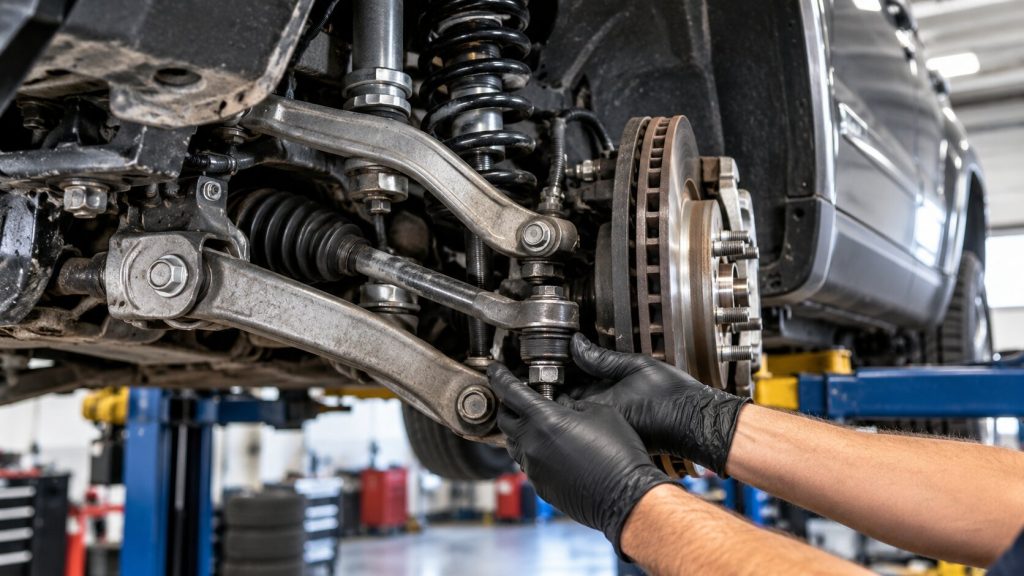
Steering and suspension concerns usually develop over time rather than appearing without warning. A vehicle may begin with a slight pull during braking, a clunk over uneven pavement, or tire wear that seems minor at first. As components such as bushings, ball joints, and steering connections wear, the wheels may no longer maintain consistent contact with the road, changing how the vehicle feels during everyday driving.
Yes. Worn steering and suspension components can contribute to handling concerns, uneven tire wear, and alignment changes. At Schmidt Auto Care in Springboro, inspections combine customer symptoms with road testing, physical checks, suspension measurements, and alignment evaluations to determine whether a worn part is affecting vehicle control.
Many inspections begin with a driver explaining a change they noticed behind the wheel. A Jeep Grand Cherokee that feels less stable after hitting potholes or no longer tracks straight may be showing early signs of suspension wear. Springboro driving conditions, including salt-brine treatments, frost-heaved pavement, and repeated road impacts, can place additional stress on control arm bushings, ball joints, and tie rod ends, making accurate diagnosis important before replacing components that may not be the source of the concern.
Diagnosing Steering And Suspension Concerns In The Shop
The first step in a suspension diagnosis is understanding when and how the problem appears. A vehicle that shakes only at highway speeds may point toward a different concern than one that pulls during braking or clunks over uneven pavement.
During an inspection, technicians look for connections between the driver’s complaint and the condition of the steering and suspension system. A road test may reveal when the symptom occurs, while a physical inspection determines which components require closer attention.
Common complaints that bring vehicles in for steering and suspension checks include:
- Steering wheel vibration
- Pulling toward one side of the road
- Clunking noises over bumps
- Uneven tire wear
- Loose or wandering steering feel
- Vehicle movement during braking
One important part of diagnosis is avoiding assumptions. A steering pull does not automatically mean the vehicle needs an alignment. A vibration does not always come from a tire issue. Worn suspension components can change wheel movement and create symptoms that overlap with other vehicle systems.
Inspecting Components That Control Wheel Movement
Suspension parts work together to keep the wheels positioned correctly while allowing the vehicle to absorb road impacts. When one component wears, other parts may experience additional stress.
On vehicles such as the Jeep Grand Cherokee, technicians commonly inspect:
- Lower control arm bushings
- Ball joints
- Tie rod ends
- Sway bar links
- Steering connections
- Wheel and tire condition
Control arm bushings are especially important because they allow controlled movement while keeping suspension geometry stable. As rubber materials age, cracks or separation can develop. The vehicle may still drive normally, but wheel position can shift during braking or acceleration.
Ball joints require careful inspection because they connect suspension movement with steering control. A worn ball joint may create looseness, noise, or changes in handling. Damaged protective boots can allow moisture and road debris to affect the joint over time.
Tie rod ends also play a direct role in steering response. Excessive movement in these connections can affect toe alignment, which may contribute to uneven tire wear and steering changes.
Road Conditions That Affect Suspension Wear
Daily driving conditions have a major influence on suspension life. Vehicles traveling through Springboro experience seasonal changes that can place additional stress on steering and suspension components.
Winter road treatments create a challenging environment for exposed vehicle parts. Salt and moisture can collect around damaged protective boots and aging components. Frost-heaved pavement and potholes transfer impact forces through the tires, wheels, and suspension assemblies.
A driver may not notice a problem immediately after a single impact. Instead, symptoms often appear later through changes such as:
- A steering wheel that feels less stable
- Tires wearing unevenly
- New noises from the front end
- A vehicle drifting during normal driving
- Increased steering correction on the highway
The Jeep Grand Cherokee example is useful because SUVs often carry more weight and sit higher than many passenger vehicles. Those characteristics can increase the forces placed on suspension components during daily use, especially when combined with rough pavement and changing weather conditions.
Alignment Concerns And Tire Wear Diagnosis
Alignment measurements show how the wheels are positioned compared with factory specifications. The main angles technicians review include toe, camber, and caster because each affects how the vehicle tracks and how the tires contact the road.
A vehicle can have an alignment concern caused by worn mechanical parts. If a bushing allows the control arm to move, the alignment settings may change while the vehicle is braking or accelerating.
Tire wear often provides clues about what is happening underneath the vehicle.
Examples include:
- Feathered tread blocks may indicate toe-related concerns
- Wear on one edge of the tire may point toward alignment or suspension issues
- Uneven wear across the tire may involve several possible causes
Alignment equipment provides measurements, but those numbers must be considered alongside the condition of the suspension. Adjusting alignment angles without addressing worn components may not provide a lasting repair because the vehicle may continue allowing unwanted movement.
Loaded Suspension Testing And Diagnostic Methods
One of the most important parts of suspension diagnosis is checking how components behave under conditions similar to actual driving. Some worn parts may not show obvious movement when the suspension hangs freely on a lift.
A loaded inspection places the suspension closer to its normal operating position. This can reveal movement that affects steering control during braking, turning, or driving over rough pavement.
Technicians may use several methods during diagnosis:
- Visual inspection of bushings, boots, and connections
- Physical testing for looseness or excessive movement
- Road testing to reproduce customer concerns
- Alignment measurements to review wheel positioning
- Listening equipment to isolate difficult noises
At Schmidt Auto Care, the inspection process focuses on connecting the customer’s symptoms with measurable conditions. For example, a Jeep with front-end noise may have multiple possible causes. Testing helps determine whether the concern comes from a steering connection, suspension bushing, tire issue, or another area.
Technician Experience With Suspension Diagnostics
Many suspension concerns require more than identifying a worn-looking part. The condition of the vehicle, driving habits, mileage, and the specific complaint all influence the diagnostic approach.
Diagnostic Verdict: When a Jeep Grand Cherokee arrives with steering pull, uneven tire wear, or front-end noise, the inspection should start with the parts that control wheel movement. If suspension components allow movement beyond their intended range, alignment adjustments alone may not correct the driving concern.
The most useful inspections often combine customer observations with physical measurements. A driver may describe a vehicle that feels loose after hitting bumps, while tire wear and suspension movement provide additional information about the source.
This approach prevents unnecessary repairs and creates a clearer path toward correcting the actual concern.
Preventing Larger Steering And Suspension Problems
Suspension maintenance is not only about correcting noises. A worn suspension system changes how the vehicle reacts when braking, turning, or crossing uneven pavement.
Drivers can protect their vehicles by paying attention to early warning signs and scheduling inspections when changes appear.
A suspension check is recommended when drivers notice:
- New steering wheel vibration
- Repeated clunking sounds
- Uneven tire wear
- Changes in vehicle tracking
- A different feel during braking
Addressing these concerns earlier can also help protect tires and other connected components. A worn suspension part can affect alignment and create additional stress on surrounding systems.
Frequently Asked Questions
Can worn suspension parts cause uneven tire wear?
Yes. Worn suspension components can allow wheel angles to change during driving, which may create uneven contact between the tire and the road. Alignment measurements and suspension inspections can help identify the cause.
Can a vehicle need suspension repairs even if it drives normally?
Yes. Some worn components develop gradually and may not create major symptoms immediately. Regular inspections can identify excessive movement before it creates larger handling concerns.
Does a wheel alignment fix suspension problems?
No. An alignment adjusts wheel angles, but it cannot correct worn parts that allow movement. Suspension components should be inspected before completing alignment adjustments.
Why do potholes and rough roads affect steering systems?
Rough pavement transfers impact forces through tires, wheels, and suspension parts. Repeated impacts can accelerate wear in components that control wheel movement and steering response.
How are steering and suspension problems diagnosed?
Technicians diagnose these concerns by reviewing symptoms, performing inspections, testing component movement, checking alignment measurements, and confirming how the vehicle behaves during road testing.
Schedule A Steering And Suspension Inspection In Springboro
If your vehicle has developed steering pull, uneven tire wear, vibration, or front-end noises, Schmidt Auto Care can inspect the components responsible for safe handling and stable wheel control.
Located at 285a Hiawatha Trail, Springboro, OH 45066, United States, Schmidt Auto Care provides steering, suspension, and alignment services designed around real driving conditions. Schedule an inspection to identify worn components, alignment concerns, and handling issues before they affect your daily driving experience.