Check engine light diagnostics require more than reading trouble codes. A scan tool identifies the system reporting an issue, but testing confirms the actual cause. Professional diagnosis uses data, electrical testing, and inspection to determine whether the problem involves wiring, sensors, fuel systems, or mechanical components before unnecessary parts replacement.
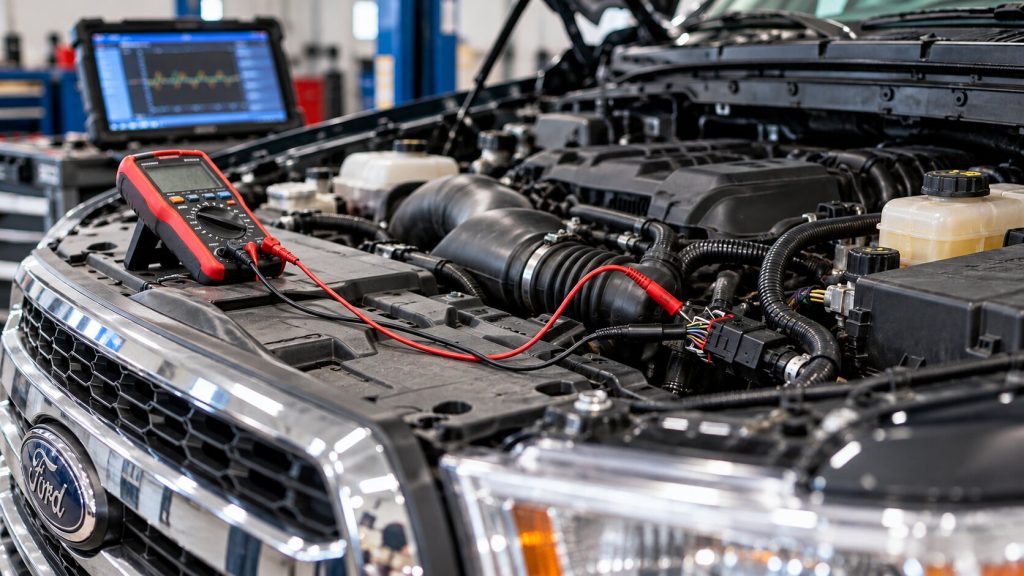
A check engine light on a 2017 Ford F-150 does not automatically mean the engine needs new spark plugs, coils, or sensors. During diagnostics, I often see trucks arrive after several parts have already been replaced because the stored code was treated as the answer instead of the starting point.
One F-150 that came through the shop had a random misfire code and an inconsistent idle complaint. The previous repair attempts focused on ignition components because the scanner showed misfire activity. The truck still had the same problem after those parts were installed.
The diagnostic process changed once the electrical system was tested under real operating conditions. The issue was not the ignition parts. The problem was an intermittent voltage drop caused by a connector issue near the harness routing area exposed to winter road conditions.
For trucks driven around Springboro, repeated exposure to road brine, moisture, and temperature swings can affect electrical connections over time. A connector may look clean from the outside while developing poor terminal contact inside the housing.
A Check Engine Code Does Not Identify the Broken Part
A diagnostic trouble code tells the PCM that a monitored value moved outside its expected range. It does not tell the technician which component needs replacement.
A P0300 random misfire code, for example, only confirms that the computer detected inconsistent combustion events. The source could involve several areas:
- Ignition components such as coils or plugs
- Fuel delivery problems
- Vacuum leaks
- Mechanical engine concerns
- Wiring or connector issues affecting sensor information
The mistake happens when the code is treated like a parts order. Replacing components without confirming the cause can create unnecessary expense while leaving the original problem untouched.
During diagnosis, I look at what the truck is actually reporting. Freeze-frame data, fuel trims, electrical readings, and component operation provide a clearer picture than the trouble code alone.
A Springboro F-150 Diagnostic From the Shop
The truck involved in this case was a 2017 Ford F-150 with a check engine light, rough idle symptoms, and intermittent misfire counts recorded by the PCM.
The first inspection showed that several common ignition-related repairs had already been attempted. The spark plugs and ignition coils were not the source of the concern, but they had been replaced because the code pointed technicians toward a misfire-related issue.
The next steps focused on gathering information before replacing anything else.
The diagnostic process included:
- Reviewing freeze-frame data captured when the code appeared
- Checking fuel trim numbers during different driving conditions
- Monitoring sensor signals while the engine was running
- Testing electrical circuits under load
- Inspecting connectors exposed to road spray and moisture
The scan data showed the issue was not consistently present. The misfire activity increased under certain conditions rather than appearing continuously at idle.
That detail changed the direction of the inspection.
A static resistance check on a wire can show a circuit appears normal while sitting still. A vehicle harness experiences vibration, heat cycles, moisture exposure, and movement while driving. A connection that passes a basic test may still create an intermittent problem when the truck is operating.
The circuit measured within specification at rest but dropped outside the acceptable range when loaded, which explained why the truck passed basic resistance testing but continued to misfire on the road. Further inspection showed terminal contact concerns that could interrupt the electrical signal.
The repair involved correcting the connector issue rather than replacing additional ignition components.
Winter Road Conditions Can Affect Vehicle Wiring
Vehicles in Southwest Ohio regularly experience changing weather conditions throughout the year. Freeze-thaw cycles create moisture movement, while road treatment materials can collect around lower vehicle areas.
Trucks that spend significant time on roads treated with de-icing materials may experience more exposure around:
- Frame-mounted wiring connectors
- Lower engine harness areas
- Sensor connections near road spray zones
- Ground connections exposed to moisture
The issue is not simply that a vehicle gets dirty. The concern develops when moisture reaches electrical contact points and affects the quality of the connection.
A connector can still be attached securely while the electrical connection inside has deteriorated. This is why visual inspection alone is not always enough.
Testing Electrical Problems Requires More Than Reading Codes
A proper diagnosis follows the evidence from the vehicle rather than guessing from the code description.
When a truck arrives with a check engine light, the inspection process may include:
- Recording freeze-frame information to understand when the problem occurred
- Comparing short-term and long-term fuel trim readings
- Testing sensor power, ground, and signal circuits
- Checking for vacuum leaks when fuel mixture concerns appear
- Using an oscilloscope when a signal needs closer examination
Fuel trim information can show whether the engine is compensating for an air or fuel imbalance. A combined correction above normal operating ranges can point toward a problem that needs further testing.
Electrical testing provides another layer of information. A voltage drop test can reveal resistance in a circuit that affects component operation.
For example, a sensor may be reporting incorrect information because the sensor itself is defective. It may also be reporting incorrectly because the signal wire, power supply, or ground connection is compromised.
The repair decision should come after the circuit proves what is happening.
Why Parts Replacement Alone Can Create More Problems
Modern vehicles depend on multiple computers, sensors, and electrical networks working together. Replacing parts without confirming the cause can become expensive and may introduce new variables.
Common examples include:
- Replacing oxygen sensors when the actual issue is an intake leak
- Replacing ignition coils when the cause is wiring-related
- Replacing fuel components when the problem is power supply related
- Replacing sensors without checking connector condition
A new part cannot correct a damaged connection feeding incorrect information to the PCM.
This is why accurate diagnosis saves time. It reduces unnecessary repairs and keeps the focus on the actual cause of the warning light.
Signs Your Truck Needs Diagnostic Testing
Some check engine light situations need immediate attention, especially when drivability changes are noticeable.
Schedule a diagnostic inspection if you notice:
- Rough idle after starting the truck
- Engine hesitation during acceleration
- A check engine light that returns after repairs
- Misfire codes that continue after replacing common ignition parts
- Warning lights appearing after winter driving conditions
A scanner can retrieve information from the vehicle, but interpreting that information requires testing. The code provides direction. The diagnosis comes from confirming what the vehicle is actually experiencing.
Frequently Asked Questions
Can a bad connector cause a check engine light?
Yes. A damaged or corroded connector can interrupt electrical signals and cause the PCM to receive incorrect information from sensors or components.
Should I replace a sensor when the scanner shows a sensor code?
No. A sensor code means the PCM detected an abnormal reading or circuit condition. Testing the sensor circuit, wiring, power supply, and ground helps determine whether the sensor itself is the issue.
Why does my check engine light come back after replacing parts?
The light may return because the original cause was not repaired. If the problem involves wiring, air leaks, fuel delivery, or another system, replacing unrelated parts will not correct the condition.
Can winter weather affect vehicle electrical systems?
Yes. Moisture, road salt, and repeated temperature changes can contribute to corrosion and connection problems, especially in areas exposed to road spray.
Professional Check Engine Light Diagnosis in Springboro
A check engine light deserves more than a quick code scan and a guess at the most common replacement part. Accurate repairs begin with testing the system, measuring the circuit, and confirming what caused the warning.
If your Ford F-150 or another vehicle has a recurring check engine light, misfire code, or drivability concern, Schmidt Auto Care can inspect the vehicle and identify the source of the problem. Visit Schmidt Auto Care at 285a Hiawatha Trail, Springboro, OH 45066 for professional diagnostic service focused on accurate testing and proper repairs.